
NEWSROOM · News Center
News Center
Technology and product updates from the manufacturer
 Animated cover
Product updates
Die build-up: the quietest cost on an extrusion coating line
Die build-up is the quietest cost on extrusion coating and cast film lines. Following the manual, this article summarises the approach of R902 plastic external lubrication modifier: the internal addition of a silicon compound powder, the reduction of die build-up together with increased rigidity without loss of toughness, its combination with erucamide for anti-blocking and slip, and a reference dosage of 0.5%—5% together with a parameter table.
- 01Product updates
Die build-up: the quietest cost on an extrusion coating line
Die build-up is the quietest cost on extrusion coating and cast film lines. Following the manual, this article summarises the approach of R902 plastic external lubrication modifier: the internal addition of a silicon compound powder, the reduction of die build-up together with increased rigidity without loss of toughness, its combination with erucamide for anti-blocking and slip, and a reference dosage of 0.5%—5% together with a parameter table.  02Product updates
How to Choose Between R101A and R6100? Two Processing Routes for Inorganic Powders such as Titanium Dioxide and Calcium Carbonate
Titanium dioxide (TiO₂), carbon black, calcium carbonate, talc — the treatment of inorganic powders follows two different processing routes: R101A performs encapsulation, while R6100 performs coupling. This article compares the manual data of the two models: the experimental comparison table for R101A covering tinting strength, dispersibility and oil absorption, and the 7 powder categories with their dosage tiers and physical properties for R6100, and sets out the selection criteria for routing by powder type. 03Product updates
R1848 encapsulation-type hyperdispersant: approaches to the difficult dispersion and heavy dusting of aluminium silver powder in plastics
Aluminium silver powder is difficult to disperse in plastics and dusts heavily, and at high mixing temperatures there is additionally a risk of fire and explosion — the manual writes these 3 difficulties together. This article summarises the approaches offered by the R1848 encapsulation-type hyperdispersant: chemical encapsulation by a coordination-type rare-earth organic polymer, the operating procedure of the pretreatment method and the reference dosage of 8%-10% for aluminium powder encapsulation, as well as 3 routes to reduce risk from the powder side. 04Product updates
How to Select a Halogen-Free Flame Retardant Supplier? A Model Selection Guide for PE Films and PET/PETG Transparent Articles
Californium Curium's 6 halogen-free flame retardant models are matched to the substrate: R911 for PE films and woven tapes, R912B for PET fibres and sheets, R912 for translucent articles, R915 for high-transparency articles, R940 for UV and PU systems, and R218 as a synergist replacing antimony trioxide. The article gives the dosage, processing temperature window and formulation caveats, together with the compliance documentation checkpoints to verify when selecting a supplier. Every data item has an official product data basis.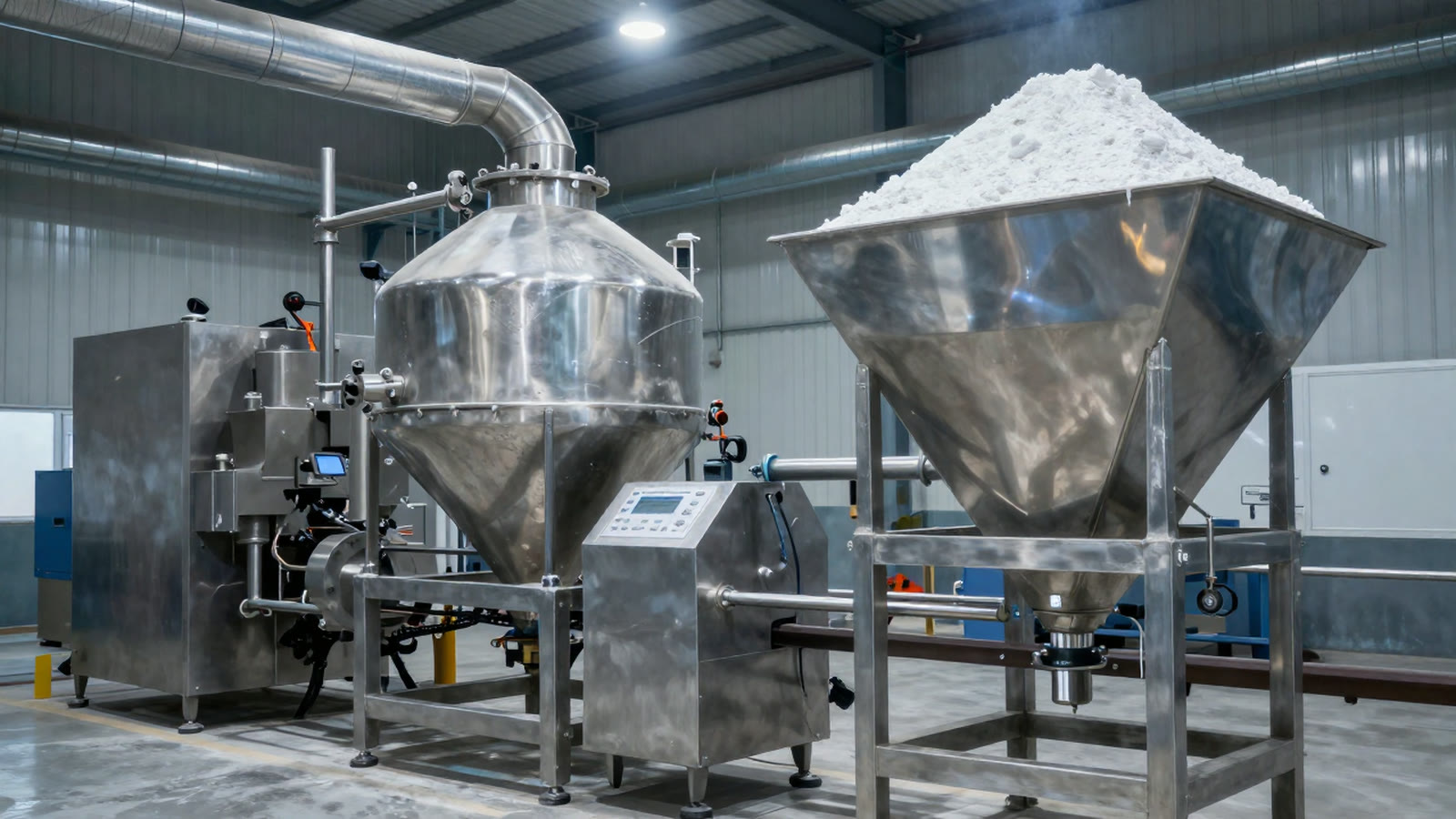 05Product updates
Californium Curium R200 Magnesium Hydroxide/Aluminium Hydroxide Flame-Retardant Aid: Measured Comparison and Usage
R200 is an organophosphorus coupling-type hyperdispersant developed specifically for halogen-free flame retardant systems based on magnesium hydroxide and aluminium hydroxide, and belongs to the hyperdispersant series. The measured data comparison table in the source shows: limiting oxygen index (LOI) 24–26% → 28–32%, peak heat release rate 350–400 → 280–320 W/g, UL94 V-2 → V-0 (0.8 mm), and effective utilisation rate of the flame retardant 60–70% → above 90%. This article supplements the quantitative results for pre-treatment (1:50/1200rpm/15min), compounding temperature (180–200℃), dosage (1–3%) and three application scenarios, with each data item referenced to official product data.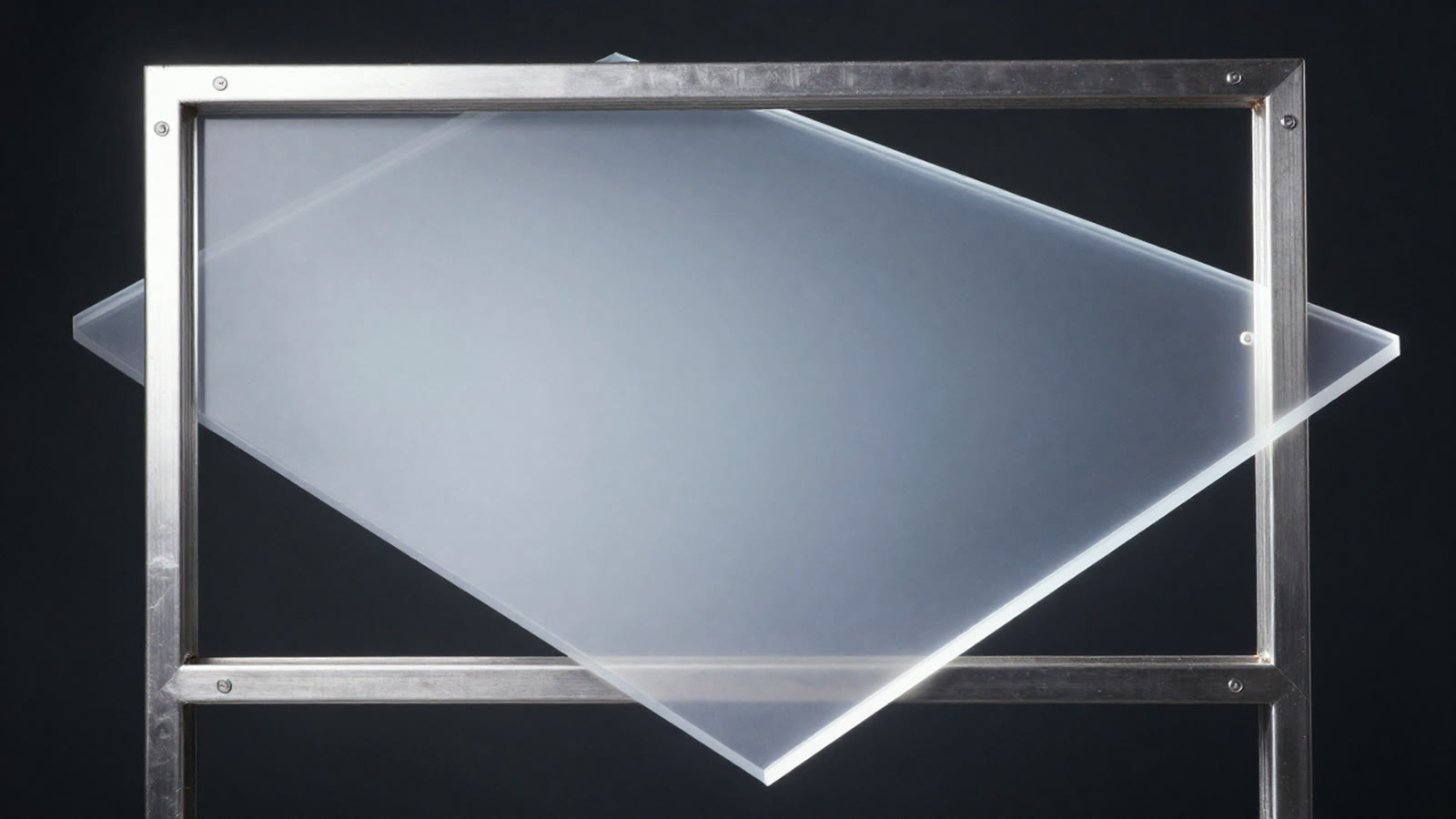 06Product updates
Californium Curium R915 Polyester-Grade Transparent Halogen-Free Flame Retardant: Technical Data Sheet and Processing Window
R915 is a transparent halogen-free flame retardant developed specifically for PET/PETG, and belongs to the flame retardant series. This article lists the core composition (polyol phosphate ester), key physical and chemical indicators (phosphorus content 18%, melting point 210℃, onset temperature of thermal decomposition ≥260℃), tiered dosage (V-2 1%–2% / V-0 2%–4%) and processing temperature window on the basis of the source documentation. It also compares the frequently asked questions about yellowing / whitening / exudation in transparent articles against the source text item by item, and defines the model-selection boundary between R915, R912 and R912B. Each data item is annotated with the source document name and data basis. 07Product updates
Californium Curium R66 Thermal Insulation Agent for Agricultural Greenhouse Film: Technical Data Sheet and Agricultural Film Matching Selection
R66 is an in-plastic additive-type thermal insulation agent (far-infrared shielding agent) belonging to Californium Curium's Comprehensive Series. The dosage is 0.5%–1% of the final plastic product. The documentation states that UV absorption below 400 nm and infrared reflectance in the 800–1300 nm range both reach above 70%, and provides complete physical property specifications, packaging, and storage information. This article separates the four commonly asked questions about agricultural film—thermal insulation, light transmission, fogging and dripping, and ageing—into four directions corresponding to R66, CP-110, R800/R800F, and M88, with every data point annotated with official product data.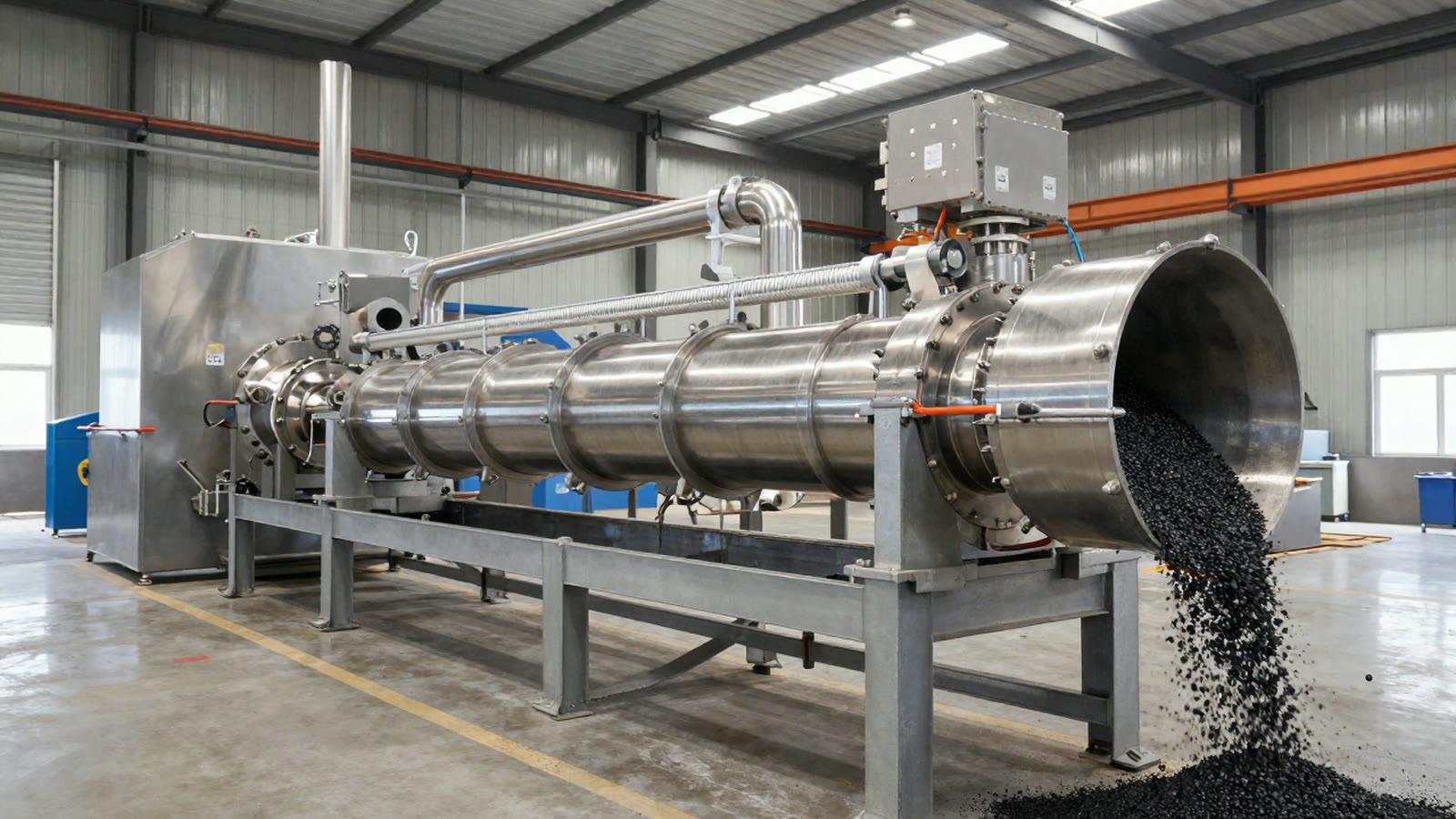 08Product updates
Californium Curium R1618 Specialty Hyperdispersant for Conductive Carbon Black: Technical Data Sheet and Dosage Basis
R1618 is a conductive carbon black hyperdispersant for plastics, classified under the conductive hyperdispersant category of the hyperdispersant series. This article lists, as stated in the documentation, the core composition, physical and chemical parameters, two dosage bases (0.5-2% by carbon black weight, 0.5%-2% by final article), typical applications, troubleshooting criteria for black spots/pitting/gel spots (fisheyes), and the selection boundaries among three models of the same family, and gives the positioning statement of "chemical dispersion × wetting dispersion." Every data item has an official product data basis. 09Product updates
Californium Curium Official Website Product Pages Mark a Data Basis: Every Model Can Be Checked Item by Item
For the 61 models already published on the Californium Curium official website, every product page marks a data basis: which data item comes from which official material. This article uses measured data from the public API to explain: 550 source annotations across the 61 models (4-18 per model, median 8), 3 levels of annotation granularity, the rule that fields and sources are published in pairs, the trade-offs for T15/OPC, and the material download entry and page counts. 10Product updates
Three Product Lines in the Flame Retardant Series: PE Film, Transparent Polyester and Synergist Replacement
Flame retardant selection starts with the substrate and finished article form. Californium Curium’s flame retardant series has several lines: R911 for thin-gauge PE articles (hindered amine type, 10%-20% to UL94 V-2/FV-2), R912 / R912B / R915 for transparent polyester (phosphorus-based, 1.5%-5% to V-0, with processing window and drying requirements), R940 for reactive systems, and flame retardant synergist R218 for replacing antimony trioxide (1:1 replacement at 50%-70%, PVC 100%). This article supplements the processing temperature, dosage, packaging and shelf life of each model and clarifies the distinction between "low-halogen" and "halogen-free".
“Product updates” · 10 resultsRSS feed
Product updatesDie build-up: the quietest cost on an extrusion coating line Die build-up is the quietest cost on extrusion coating and cast film lines. Following the manual, this article summarises the approach of R902 plastic external lubrication modifier: the internal addition of a silicon compound powder, the reduction of die build-up together with increased rigidity without loss of toughness, its combination with erucamide for anti-blocking and slip, and a reference dosage of 0.5%—5% together with a parameter table.
3 min readProduct updatesHow to Choose Between R101A and R6100? Two Processing Routes for Inorganic Powders such as Titanium Dioxide and Calcium Carbonate Titanium dioxide (TiO₂), carbon black, calcium carbonate, talc — the treatment of inorganic powders follows two different processing routes: R101A performs encapsulation, while R6100 performs coupling. This article compares the manual data of the two models: the experimental comparison table for R101A covering tinting strength, dispersibility and oil absorption, and the 7 powder categories with their dosage tiers and physical properties for R6100, and sets out the selection criteria for routing by powder type.
3 min readProduct updatesR1848 encapsulation-type hyperdispersant: approaches to the difficult dispersion and heavy dusting of aluminium silver powder in plastics Aluminium silver powder is difficult to disperse in plastics and dusts heavily, and at high mixing temperatures there is additionally a risk of fire and explosion — the manual writes these 3 difficulties together. This article summarises the approaches offered by the R1848 encapsulation-type hyperdispersant: chemical encapsulation by a coordination-type rare-earth organic polymer, the operating procedure of the pretreatment method and the reference dosage of 8%-10% for aluminium powder encapsulation, as well as 3 routes to reduce risk from the powder side.
3 min readProduct updatesHow to Select a Halogen-Free Flame Retardant Supplier? A Model Selection Guide for PE Films and PET/PETG Transparent Articles Californium Curium's 6 halogen-free flame retardant models are matched to the substrate: R911 for PE films and woven tapes, R912B for PET fibres and sheets, R912 for translucent articles, R915 for high-transparency articles, R940 for UV and PU systems, and R218 as a synergist replacing antimony trioxide. The article gives the dosage, processing temperature window and formulation caveats, together with the compliance documentation checkpoints to verify when selecting a supplier. Every data item has an official product data basis.
7 min readProduct updatesCalifornium Curium R200 Magnesium Hydroxide/Aluminium Hydroxide Flame-Retardant Aid: Measured Comparison and Usage R200 is an organophosphorus coupling-type hyperdispersant developed specifically for halogen-free flame retardant systems based on magnesium hydroxide and aluminium hydroxide, and belongs to the hyperdispersant series. The measured data comparison table in the source shows: limiting oxygen index (LOI) 24–26% → 28–32%, peak heat release rate 350–400 → 280–320 W/g, UL94 V-2 → V-0 (0.8 mm), and effective utilisation rate of the flame retardant 60–70% → above 90%. This article supplements the quantitative results for pre-treatment (1:50/1200rpm/15min), compounding temperature (180–200℃), dosage (1–3%) and three application scenarios, with each data item referenced to official product data.
10 min readProduct updatesCalifornium Curium R915 Polyester-Grade Transparent Halogen-Free Flame Retardant: Technical Data Sheet and Processing Window R915 is a transparent halogen-free flame retardant developed specifically for PET/PETG, and belongs to the flame retardant series. This article lists the core composition (polyol phosphate ester), key physical and chemical indicators (phosphorus content 18%, melting point 210℃, onset temperature of thermal decomposition ≥260℃), tiered dosage (V-2 1%–2% / V-0 2%–4%) and processing temperature window on the basis of the source documentation. It also compares the frequently asked questions about yellowing / whitening / exudation in transparent articles against the source text item by item, and defines the model-selection boundary between R915, R912 and R912B. Each data item is annotated with the source document name and data basis.
7 min readProduct updatesCalifornium Curium R66 Thermal Insulation Agent for Agricultural Greenhouse Film: Technical Data Sheet and Agricultural Film Matching Selection R66 is an in-plastic additive-type thermal insulation agent (far-infrared shielding agent) belonging to Californium Curium's Comprehensive Series. The dosage is 0.5%–1% of the final plastic product. The documentation states that UV absorption below 400 nm and infrared reflectance in the 800–1300 nm range both reach above 70%, and provides complete physical property specifications, packaging, and storage information. This article separates the four commonly asked questions about agricultural film—thermal insulation, light transmission, fogging and dripping, and ageing—into four directions corresponding to R66, CP-110, R800/R800F, and M88, with every data point annotated with official product data.
8 min readProduct updatesCalifornium Curium R1618 Specialty Hyperdispersant for Conductive Carbon Black: Technical Data Sheet and Dosage Basis R1618 is a conductive carbon black hyperdispersant for plastics, classified under the conductive hyperdispersant category of the hyperdispersant series. This article lists, as stated in the documentation, the core composition, physical and chemical parameters, two dosage bases (0.5-2% by carbon black weight, 0.5%-2% by final article), typical applications, troubleshooting criteria for black spots/pitting/gel spots (fisheyes), and the selection boundaries among three models of the same family, and gives the positioning statement of "chemical dispersion × wetting dispersion." Every data item has an official product data basis.
8 min readProduct updatesCalifornium Curium Official Website Product Pages Mark a Data Basis: Every Model Can Be Checked Item by Item For the 61 models already published on the Californium Curium official website, every product page marks a data basis: which data item comes from which official material. This article uses measured data from the public API to explain: 550 source annotations across the 61 models (4-18 per model, median 8), 3 levels of annotation granularity, the rule that fields and sources are published in pairs, the trade-offs for T15/OPC, and the material download entry and page counts.
5 min readProduct updatesThree Product Lines in the Flame Retardant Series: PE Film, Transparent Polyester and Synergist Replacement Flame retardant selection starts with the substrate and finished article form. Californium Curium’s flame retardant series has several lines: R911 for thin-gauge PE articles (hindered amine type, 10%-20% to UL94 V-2/FV-2), R912 / R912B / R915 for transparent polyester (phosphorus-based, 1.5%-5% to V-0, with processing window and drying requirements), R940 for reactive systems, and flame retardant synergist R218 for replacing antimony trioxide (1:1 replacement at 50%-70%, PVC 100%). This article supplements the processing temperature, dosage, packaging and shelf life of each model and clarifies the distinction between "low-halogen" and "halogen-free".
10 min read