
Product updates · 27 September 2026
Californium Curium R200 Magnesium Hydroxide/Aluminium Hydroxide Flame-Retardant Aid: Measured Comparison and Usage
- 01Anti-agglomeration
- 02Distribution rate
- 03Lubrication balance
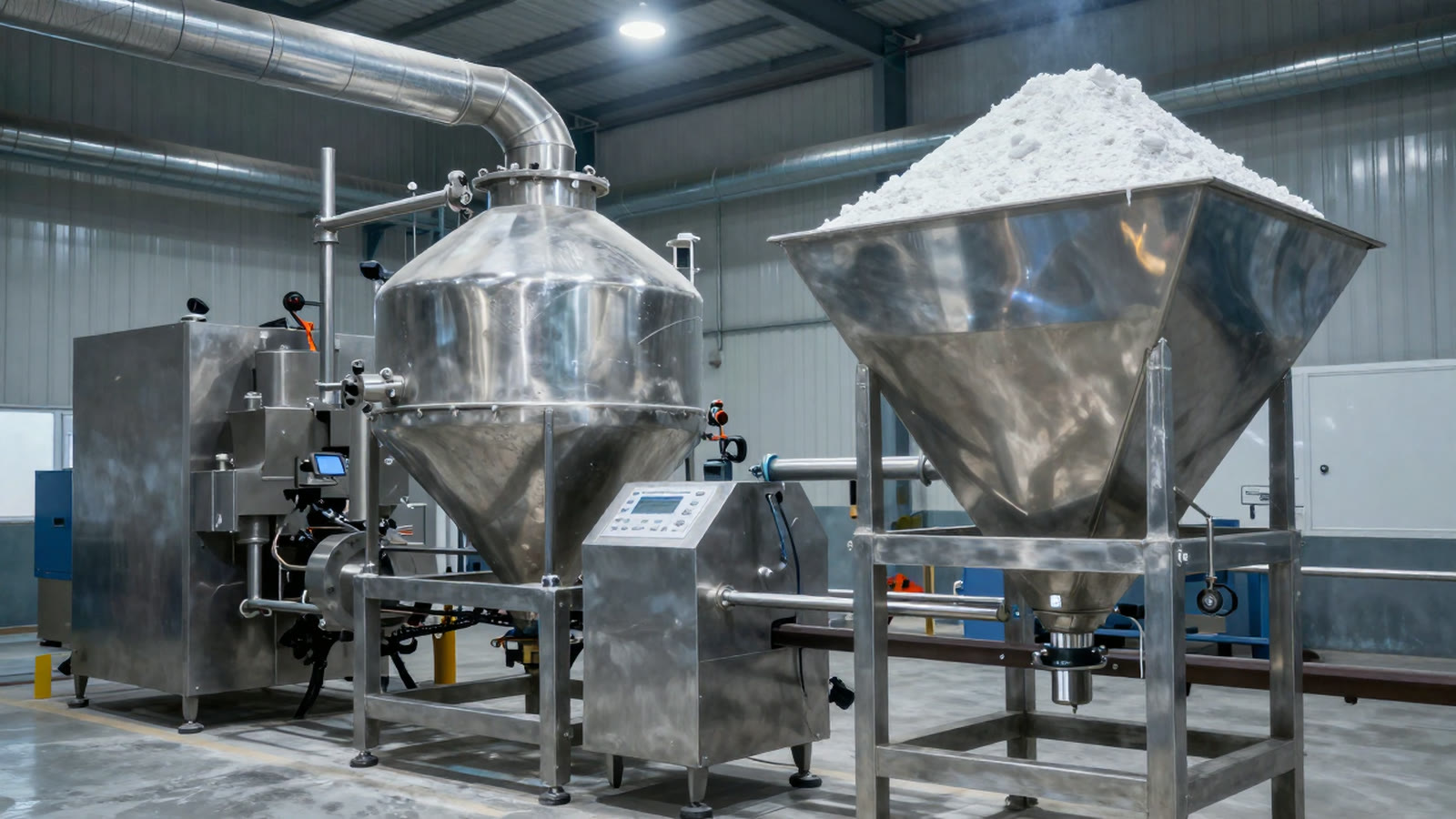
R200 is an organophosphorus coupling-type hyperdispersant developed specifically for halogen-free flame retardant systems based on magnesium hydroxide and aluminium hydroxide, and belongs to the hyperdispersant series. The measured data comparison table in the source shows: limiting oxygen index (LOI) 24–26% → 28–32%, peak heat release rate 350–400 → 280–320 W/g, UL94 V-2 → V-0 (0.8 mm), and effective utilisation rate of the flame retardant 60–70% → above 90%. This article supplements the quantitative results for pre-treatment (1:50/1200rpm/15min), compounding temperature (180–200℃), dosage (1–3%) and three application scenarios, with each data item referenced to official product data.
- Models involved in this article: R200
- Numerical values appearing in the text: 2% · 98% · 3% · 60%
- Article size: 10 sections · 6 data tables · 2 blocks already placed after first screen
- Full text arranged as "Data first → Mechanism second → Selection last", each item's source cited to printed page for traceable review
Moved from the bodyMeasured comparison before and after adding 2% R200 · full table moved forward
| Test item | Without dispersant | With 2% R200 | Efficiency improvement |
|---|---|---|---|
| Limiting oxygen index (LOI) | 24-26% | 28-32% | +16.7%~+23.1% |
| Peak heat release rate | 350-400 W/g | 280-320 W/g | Reduced by 20%~30% |
| UL94 vertical burn rating | V-2 | V-0 (0.8 mm thickness) | Direct 1-grade increase |
| Effective utilisation rate of the flame retardant | 60-70% | Above 90% | Increase of 30% or more |
Figures in mechanism and dosage (as quoted)
- 5μm→1μm
- 2%
According to the "from 5μm to 1μm" specification in this article, the particles are gathered frame by frame: the particles become increasingly dense, which is the dispersion process described in the material.Scroll-driven, animated frame by frame with requestAnimationFrame; when the system requests reduced motion or the screen is narrow, the final frame is shown directly.
R200 is an organophosphorus coupling-type hyperdispersant developed by Californium Curium for halogen-free flame retardant materials based on magnesium hydroxide and aluminium hydroxide, and belongs to the hyperdispersant series (Based on official product data). Its role is clear: it improves the flame retardant efficiency of magnesium hydroxide and aluminium hydroxide and improves their dispersibility and compatibility. Appearance: yellow viscous liquid; main components: organophosphorus, hydroxyl and ester compounds. The core of this page is a measured data comparison table—control figures without addition and with 2% addition, reproduced line by line.
halogen-free flame retardant
Model Positioning and One-Page Overview
The document’s definition of R200 is reproduced verbatim below:
R200 is an organophosphorus coupling-type hyperdispersant developed mainly for halogen-free flame retardant materials based on magnesium hydroxide and aluminium hydroxide, to improve the flame retardant efficiency of magnesium hydroxide and aluminium hydroxide, improve the dispersibility and compatibility of magnesium hydroxide and aluminium hydroxide, and enhance the plasticising effect of the resin (increasing the tensile strength of the resin). R200 is the core additive for targeted improvement of flame retardant efficiency, helping upgrade the performance of halogen-free magnesium hydroxide/aluminium hydroxide flame retardant systems.
(Based on official product data)
| Item | Content | Source |
|---|---|---|
| Full name | Magnesium hydroxide/aluminium hydroxide special organophosphorus coupling-type hyperdispersant R200 | Same as above |
| Series | Hyperdispersant Series | Official product data |
| Main components | Organophosphorus, hydroxyl, ester compounds | Official product data |
| Appearance | Yellow viscous liquid | Same as above |
| pH value | 7.5–8.0 | Same as above |
| Active content | ≥98% | Same as above |
| Dosage | 1–3% based on hydroxide filler mass; 2% recommended | Official product data |
whether a dispersant has been added
Why It Matters: The Bottleneck of Hydroxide Flame Retardancy Is Not “How Much Is Added”, but “Utilisation”
Magnesium hydroxide and aluminium hydroxide are endothermic halogen-free flame retardants, acting by dehydration, heat absorption and temperature reduction. Their problem is precisely here: the dosage is high (in the document’s scenarios, at the 60% level). Under high loading, once particles agglomerate, the contact area between the flame retardant and the matrix shrinks—the document quantifies this in one line: without dispersant, the effective utilisation rate of the flame retardant is 60–70%, and after adding 2% R200 it is above 90%. (Based on official product data)
improves the wetting of the flame retardant and reduces flame-retardant dead zones caused by agglomeration
tested by a certain institution
Measured Data Comparison: Before and After Adding 2% R200
Same-dimension range intersection (% · 2 objects)
Dimension · %X-axis = dimension %; colored band = target interval where the object can fall; points outside the band = portions that cannot be reached.
- Target band
- Peak heat release …
- Effective utilisa…
- X-axis same dimension % ·
- X-axis scale based on this article's max (20–70 %); do not directly compare lengths across articles.
- Peak heat release …20–30 %
- Effective utilisat…60–70 %
Chart data (source text verbatim)
| Object | Range |
|---|---|
| Peak heat release rate | 20–30 % |
| Effective utilisation rate of the flame retardant | 60–70 % |
Source textScale 18–77 %
Melt viscosity reduction formulation hierarchy
Dimension · %Each segment's width = proportion of that component, totaling exactly 100%; segment color shading = hierarchy (main agent / auxiliary agent / carrier).
- viscosity reduction 15-
- Synergist · 20%
- er filler loading (up to
- Main · 60%
- sage can be increased by
- Synergist · 20%
- Fig. Melt viscosity reduction formulation hierarchy
- Total 100.0% — Classification by share: Main ≥25% · Synergist 8~25% · Additive <8%
- viscosity reductio…20 %
- er filler loading …60 %
- sage can be increa…20 %
Chart data (source text verbatim)
| Component | Share |
|---|---|
| viscosity reduction 15- | 20% |
| er filler loading (up to | 60% |
| sage can be increased by | 20% |
Technical data sheet for modelScale 0–100 %
The table below reproduces all 4 rows from the document’s [Quantified Improvement in Flame Retardant Performance (Measured Data Comparison)] subsection, verbatim (including the original percentage signs and unit notation):
(Based on official product data)
Effect on flame retardant efficiency
(Based on official product data)
interfacial tension reduction ≥40% (with PP matrix)
Mechanism: Covalent-Bond Coupling + Particle Size 5μm→1μm + Three-Layer Protection
Moved from the bodyQuantitative results of three typical scenarios · full table
| Item | Specification parameter | Effect on flame retardant efficiency (from the official materials) |
|---|---|---|
| Active content | ≥98% | High purity ensures maximum coupling and dispersion efficiency |
| Heat resistance | Stable and effective at 200℃ and above | Forms a temperature-gradient synergy with the hydroxide decomposition temperature (300-450℃) |
| Interfacial tension reduction | ≥40% (with PP matrix) | Improves wetting of the flame retardant and reduces flame-retardant dead zones caused by agglomeration |
| Melt viscosity reduction | 15-20% (60% filler system) | Allows higher filler loading (up to 60%); flame retardant dosage can be increased by 20% |
| pH value | 7.5-8.0 | — |
| Appearance | Yellow viscous liquid | — |
The document divides the action of R200 into two points, reproduced verbatim:
Dispersion and coupling synergy: organophosphorus groups form covalent bonds with the hydroxide surface, dispersing agglomerated particles (average particle size reduced from 5μm to below 1μm) into nanoscale units, expanding the contact area between the flame retardant and the matrix by more than 3 times, and significantly improving the endothermic cooling efficiency during combustion.
Phosphorus and metal hydroxide synergistic flame retardancy: during combustion, “three-layer protection” is achieved simultaneously: ▶ the organophosphorus component decomposes to form a phosphoric acid char layer (200-300℃), blocking heat transfer; ▶ magnesium hydroxide/aluminium hydroxide dehydrates and absorbs heat (300-450℃), lowering the matrix temperature; ▶ metal oxides combine with the char layer to form a barrier layer, suppressing the release of combustible gases.
(Based on official product data)
The term “covalent bond” is the dividing line between this route and ordinary encapsulation-type dispersants: it does not merely separate the particles; it allows organophosphorus groups to bond directly to the hydroxide surface, truly pulling the flame retardant into the stress-bearing and heat-transfer network of the matrix. The document also offers a temperature-gradient synergy reading: R200 withstands temperatures above 200℃, while hydroxide dehydration and heat absorption occur at 300–450℃—the additive remains stable at processing temperatures and gives way to the flame retardant at combustion temperatures. (Based on official product data)
How to Use: Pre-Treatment, Compounding Temperature, Dosage, and Masterbatch Filler Loading
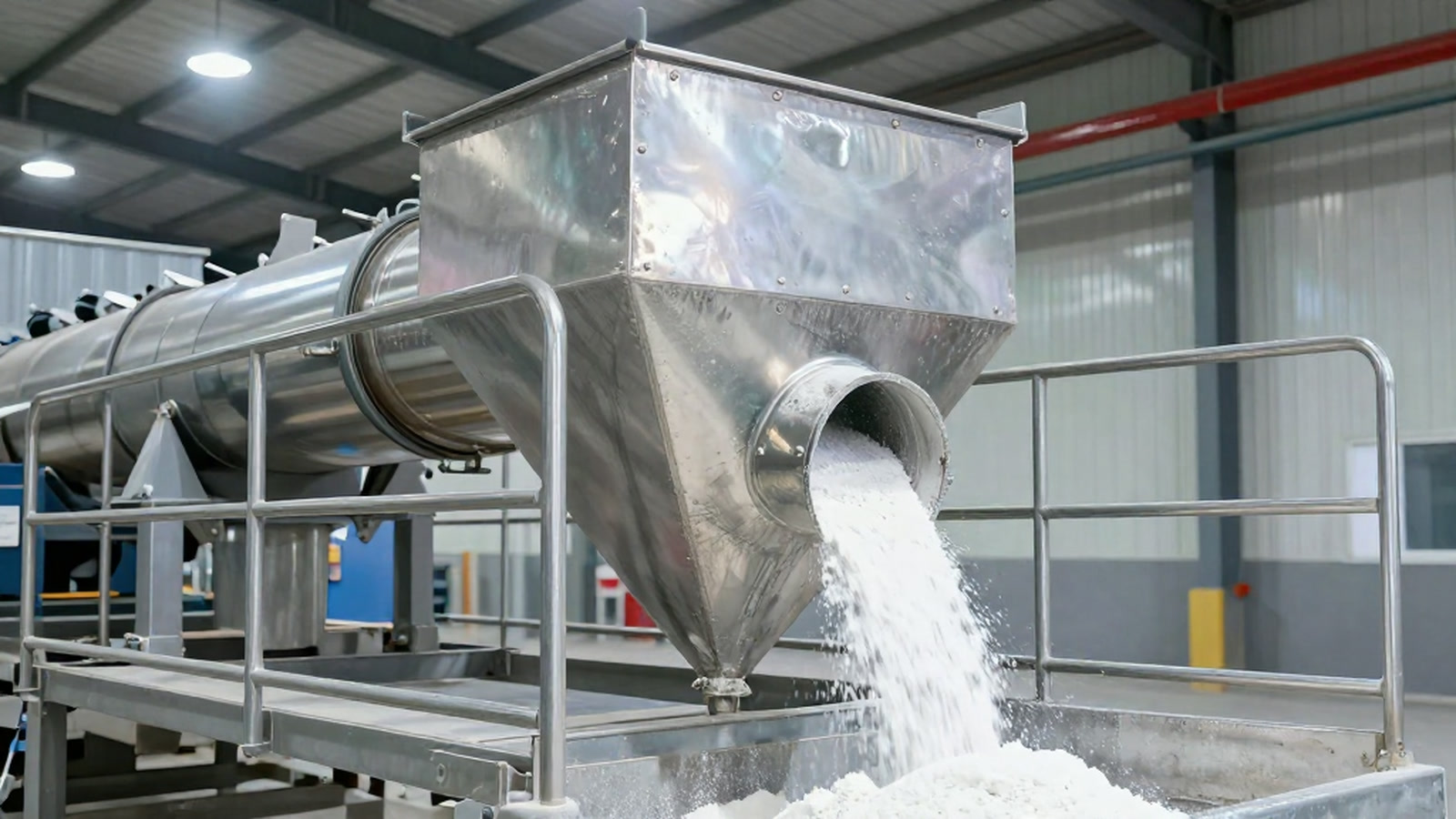
The processing recommendations given in the document are reproduced item by item below (this is a process window that can be copied directly):
| Process step | Original text | Source |
|---|---|---|
| Pre-treatment process | “Pre-treat this product with hydroxide at a 1:50 ratio in a high-speed mixer (1200rpm, 15 minutes); this can achieve a filler surface coating coverage of more than 95% and improve the dispersion uniformity of the flame retardant by 40%.” | Official product data |
| Compounding temperature control | “The recommended processing temperature for PP matrix is 180-200℃; avoid high temperatures (>220℃) that may cause decomposition of the organophosphorus component and affect the synergistic flame retardant effect.” | Same as above |
| Precise dosage | “Add at 1-3% of the hydroxide filler mass; 2% is recommended (when the filler specific surface area is >20m²/g, it is recommended to increase to 3%).” | Same as above |
| Masterbatch filler loading | “During masterbatch preparation, it is recommended to control the filler content at 60-70%; excessively high loading (>80%) may affect the dispersant coating effect and cause a decline in flame retardant efficiency.” | Same as above |
| Synergist combination | “During filler pre-treatment, 3% silane coupling agent may be added to form an ‘organophosphorus-silane’ dual interfacial modification, further improving the bonding between the flame retardant and the matrix.” | Same as above |
Feeding method and equipment adaptation: R200 is a yellow viscous liquid. The document does not give liquid metering/pumping methods or screw configuration recommendations (this item is not listed in the document); the available service path is given in Section 9 (Based on official product data).
Quantitative results for three typical scenarios
What to do if V-0 cannot be passed
| Scenario | Verbatim result in the document | Source |
|---|---|---|
| Electrical & electronics enclosure | “Adding 2% of this product to a PP flame retardant system, together with 60% magnesium hydroxide, enables the finished article to achieve UL94 V-0 rating (1.5mm), while raising the heat deflection temperature by 10℃.” | Official product data |
| Automotive interior part | “After using this product in a PE-based composite, the limiting oxygen index increases from 24% to 30%, meeting the automotive industry FMVSS 302 flame retardant standard (burning rate ≤100mm/min).” | Same as above |
| Cable insulation | “After adding this product to a PVC system, the vertical burn rating improves from V-1 to V-0, and smoke density is reduced by 15% (GB/T 8323.2 test).” | Same as above |
(Based on official product data)
Two things to know when reading these three figures: ① The V-0 ratings in the examples refer respectively to 1.5mm (electrical enclosure) and an unspecified thickness (cable)—these are not the same specimen preparation conditions as the 0.8mm table in Section 3; ② the three examples do not state customer names, production line conditions or batch numbers (this website’s editorial position does not publish customer names or certification numbers), nor do they include third-party test report numbers. To reproduce the results in your resin system, you need to conduct your own small-scale trials and specimen preparation verification.
How to combine with adjacent models/additives
In hydroxide flame retardant systems, R200 is not the only additive. The documented points where it can be directly combined are as follows:
| Your need | Matching product | Documented facts | Source |
|---|---|---|---|
| Surface activation/pre-dispersion of hydroxide powder first | R100A Multi-functional Filler Activator | “Combines four functions—coupling agent, grinding aid, dispersant and encapsulating agent—in one”; “activation rate above 98%, can significantly reduce oil absorption value”; recommended addition ratio “3‰ to 10‰ (generally calcium carbonate 3‰-7‰, talc 8‰-10‰, barium sulphate 5‰-7‰, titanium dioxide 3‰-5‰)”; application field: inorganic mineral powders (calcium carbonate, talc, barium sulphate, titanium dioxide, etc.) | Official product data |
| Lower formulation cost / reduce antimony trioxide use | R218 Environmentally Friendly Synergistic Flame Retardant | Environmentally friendly phosphorus-silicon flame retardant, white crystalline powder, odourless and non-toxic; “in PP/PE flame retardant systems it can replace 50% to 70% of antimony trioxide at a 1:1 ratio”; “in PVC flame retardant systems it can replace 100% of antimony trioxide”; in halogen-free systems it works with phosphorus-based and intumescent flame retardants to provide rapid char formation, oxygen barrier and smoke suppression | Official product data |
| Direct purchase of finished flame retardant masterbatch (PP halogen-free V0) | M933 Flame Retardant Masterbatch | “Compounded from a phosphorus-based flame retardant and a small amount of synergist, subjected to surface encapsulation treatment, and pelletised after thorough mixing with the PP carrier”; halogen-free, melamine-free, no sulphate residue; reference dosage 15-25%; “in PP sheet with a thickness of 0.4mm, when 25 parts of this product are added, the drips do not ignite the cotton” | Official product data |
| How to position when wax/EBS-type wetting dispersants are also present in the formulation | TPS (alkyl acid ester) wetting dispersant | “Its wetting and lubricating properties are superior to polyethylene wax (PE wax); wetting is significantly superior to EBS (ethylene bis-stearamide); lubricity is comparable to EBS but without the exudation problem of EBS”; “particularly suitable for matte finish masterbatches, can replace polyethylene wax”; “not recommended for high-gloss masterbatches” | Official product data |
dispersing performance / lubricating performance
The original wording of the [Conclusion] paragraph in the document (verbatim):
Redefining the efficiency boundary of hydroxide flame retardants. Through the triple mechanism of “dispersion homogenisation – strong interfacial coupling – phosphorus-aluminium-magnesium synergy”, this product fundamentally solves the efficiency loss caused by agglomeration of inorganic flame retardants. Measured data show that an addition level of only 1-3% can raise the flame retardant rating of the composite by 1-2 grades and increase the limiting oxygen index (LOI) by 4-8 percentage points, making it a core additive for achieving high performance in halogen-free flame retardant systems.
(Based on official product data)
Frequently Asked Questions (FAQ)
Q1: How much R200 should be added? A: Based on 1–3% of the hydroxide filler mass (2% recommended); when the filler specific surface area is >20m²/g, increase to 3%. (Based on official product data)
Q2: How should the processing temperature be controlled? A: For PP matrix, 180–200℃ is recommended; avoid >220℃ (high temperature may cause decomposition of the organophosphorus component). R200 itself remains stable and effective above 200℃. (Based on official product data)
This product is pre-treated with the hydroxide at a 1:50 ratio in a high-speed mixer (1200rpm, 15 minutes).
excessive filler loading (>80%) may affect the dispersant encapsulation effect and reduce flame retardant efficiency.
Q5: Can the amount of antimony trioxide be reduced? A: This is not the role of R200, but of R218: in PP/PE systems it can replace 50%–70% of antimony trioxide at a 1:1 ratio, and in PVC systems it can replace 100%. (Based on official product data)
tested by a certain institution
Q7: How is the liquid added? Is it difficult to feed? A: The document does not give liquid metering/pumping methods (this item is not listed in the document). The pre-treatment process described in the document is itself a route in which the additive is first coated onto the powder and then enters the screw (Q3); actual production-line adaptation should be confirmed with the technical side.
Q8: Is it only suitable for PP? A: The scenarios in the document cover three matrices: PP (electrical & electronics enclosures), PE (automotive interior parts) and PVC (cable insulation); the specification table also indicates the interfacial tension condition “with PP matrix” and the melt viscosity condition “60% filler system”—the stated conditions cannot be extrapolated; other matrices should first be tested in small-scale trials.
Obtaining technical documentation and samples
Californium Curium Address: Room 109-110, Building 2, No. 42, Mulun Chuangye 1st Road, Changping Town, Dongguan City, Guangdong Province, China Tel: +86 136 3650 0188 E-mail: kj9896@126.com
Provide hyperdispersants suitable for the customer’s extrusion production equipment based on the equipment
Product technical data are laboratory/trial typical values; please conduct small-scale trials before mass production. Hydroxide mesh, surface treatment method, resin matrix and equipment shear conditions will all affect the final result, and must be determined by re-testing on the production line.
For the data scope and source labelling method used on this website, see the data source notes on the product page. The public documentation on this website contains no certification numbers or third-party test report numbers; if such documents are needed, please request them from the technical side.
Data and Basis Notes
All parameters and descriptions in this article come from official product data; items not listed in the official materials are annotated individually in the article. This article contains no prices, customer names, certificate numbers or performance commitments; the publicly available materials on this site contain no third-party test-report numbers — for such documents, please contact the technical team.
Article actions
If this piece was useful, you can leave a mark — the like count comes from our back office at admin.kj9896.com; when the endpoint is unreachable the buttons are disabled and the count shows “—”. No invented figures are ever filled in.
Link: https://kj9896.com/en/news/r200-magnesium-hydroxide-flame-retardant-aid
Related reading
- 01Californium Curium R915 Polyester-Grade Transparent Halogen-Free Flame Retardant: Technical Data Sheet and Processing Window27 September 2026
- 02Californium Curium R1618 Specialty Hyperdispersant for Conductive Carbon Black: Technical Data Sheet and Dosage Basis27 September 2026
- 03R1848 encapsulation-type hyperdispersant: approaches to the difficult dispersion and heavy dusting of aluminium silver powder in plastics2 October 2026
Products mentioned in this article
- R200R200 Phosphorus Coupling Hyperdispersant R200
- R1800-SKR1800-SK Hyperdispersant R1800-SK
- R1800-SHR1800-SH Hyperdispersant R1800-SH
- R100AR100A Multifunctional Filler Activator R100A
- TPSTPS Alkyl Ester Wetting Dispersant TPS
- R218R218 FR Synergist R218
- M933M933 PP Halogen-Free V0 Flame Retardant Masterbatch
Keep reading
More company announcements and product updates are in the newsroom.