
Product updates · 27 September 2026
Californium Curium R915 Polyester-Grade Transparent Halogen-Free Flame Retardant: Technical Data Sheet and Processing Window
R915 is a transparent halogen-free flame retardant developed specifically for PET/PETG, and belongs to the flame retardant series. This article lists the core composition (polyol phosphate ester), key physical and chemical indicators (phosphorus content 18%, melting point 210℃, onset temperature of thermal decomposition ≥260℃), tiered dosage (V-2 1%–2% / V-0 2%–4%) and processing temperature window on the basis of the source documentation. It also compares the frequently asked questions about yellowing / whitening / exudation in transparent articles against the source text item by item, and defines the model-selection boundary between R915, R912 and R912B. Each data item is annotated with the source document name and data basis.
- 01Anti-agglomeration
- 02Distribution rate
- 03Lubrication balance
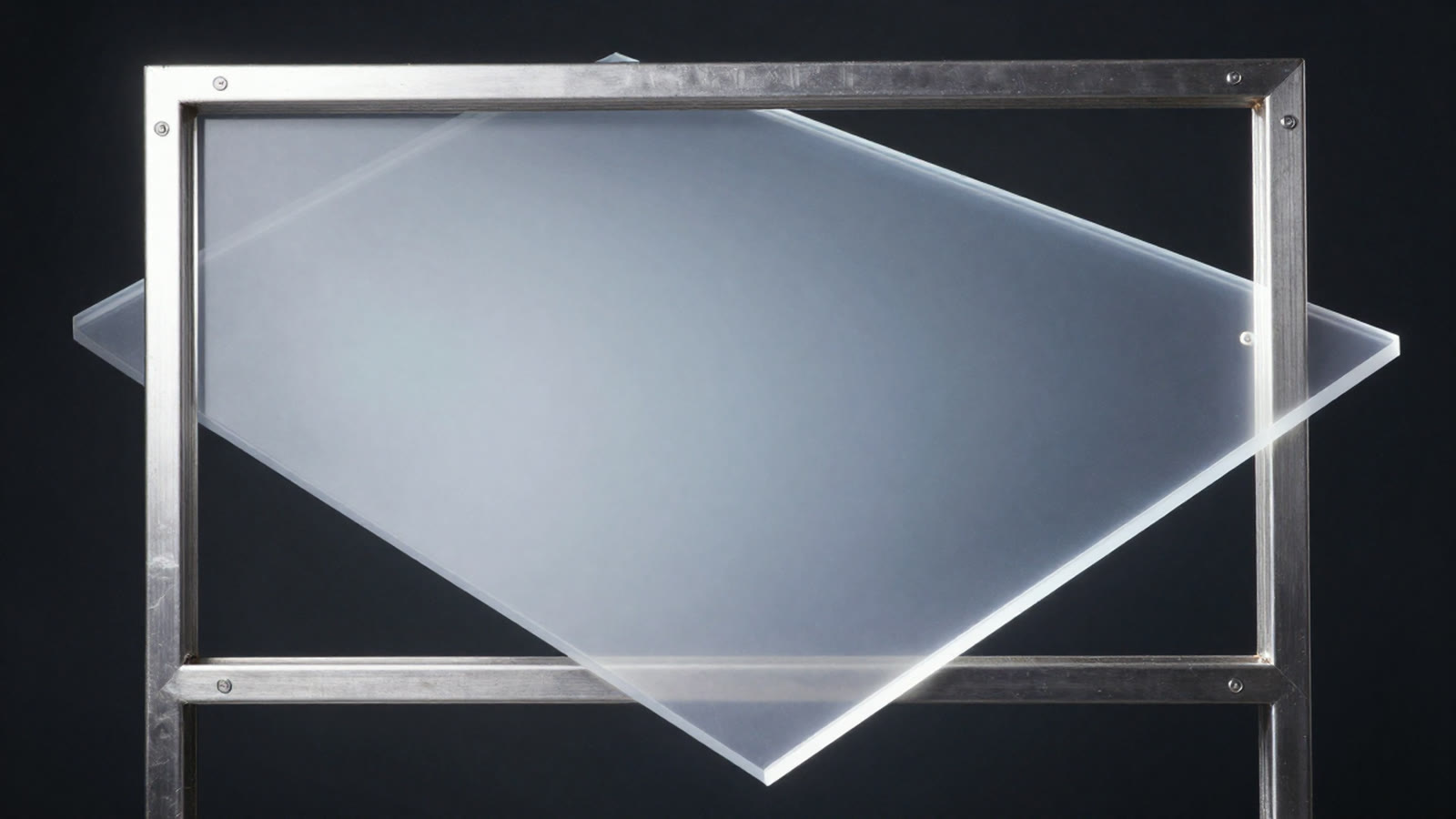
Moved from the bodyKey sentence (original text, as is)
transparent halogen-free flame retardants
Gradually expand the light transmission band frame by frame according to the light transmission aperture in this article: bandwidth expands with rolling extension, corresponding to the "light transmission unaffected" entry in the reference materials.Scroll-driven, animated frame by frame with requestAnimationFrame; when the system requests reduced motion or the screen is narrow, the final frame is shown directly.
R915 is a transparent halogen-free flame retardant developed specifically for PET/PETG by Californium Curium, and belongs to the flame retardant series. The core component is polyol phosphate ester (an additive-type organophosphorus system, halogen-free and free of heavy metals). It appears as a white crystalline fine powder, with a phosphorus content of 18%, a melting point of 210℃, and an onset temperature of thermal decomposition ≥260℃. It is an additive-type flame retardant and does not participate in the polyester copolymerization reaction. With a fineness expressed as a 325-mesh pass rate ≥98%, it is recommended for use within a barrel temperature window of 240–275℃. Each data item below is annotated with the source document name and data basis.
“Who we are” on this article: Californium Curium’s additives are organized into three lines—dispersants (with chemical dispersion as the main line, represented by the R1800 series paste-form hyperdispersants; used in combination with wetting-type dispersion agents such as wax, stearic acid and EBS (ethylene bis-stearamide) to raise dispersibility to a new level [company statement]), the flame retardant series to which R915 belongs, and the comprehensive series. R915 addresses one specific question: how to make polyester transparent and halogen-free flame retardant. It does not address dispersion problems.
Model positioning
The documentation defines it as follows:
A high-efficiency halogen-free flame retardant developed specifically for PET and PETG high-transparency polyester materials. It has no negative impact on the light transmittance or haze of the base resin, does not cause whitening, yellowing or exudation during processing, and is perfectly suited to high-transparency finished articles such as transparent sheet, film, injection-moulded optical parts and extruded profiles.
(Based on official product data)
Three frequently asked questions about transparent articles: yellowing, whitening and exudation
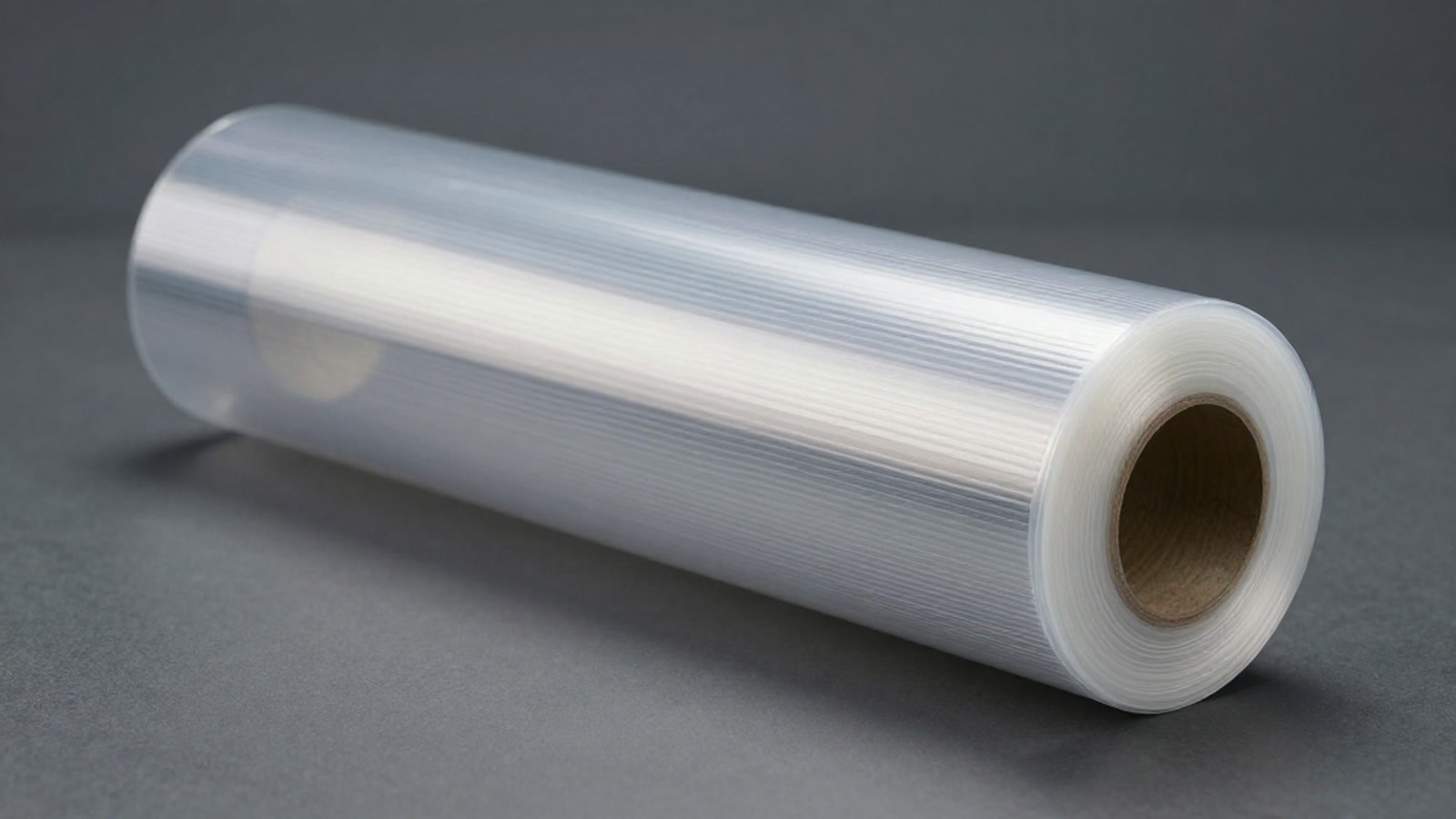
These three terms are the most common customer complaints for transparent polyester articles. The documentation provides a qualitative commitment plus processing boundaries for R915, which can be checked item by item:
| Phenomenon (customer's wording) | Source text on R915 | Source |
|---|---|---|
| “The moulded part comes out yellow” | “Does not cause whitening, yellowing or exudation during processing”; boundary on the reverse side: “prolonged residence at temperatures above 290℃ is prohibited, to avoid slight thermal degradation of the flame retardant causing yellowing” | Official product data |
| “Transparency dropped, with fogging / rainbow patterns” | “The molecular structure matches the polarity of polyester; after addition, the haze of the finished article does not increase and the light transmittance does not decline; the finished product remains highly transparent, with no whitening, fogging or rainbow pattern problems” | Official product data |
| “Surface exudation, oily fog” | “High-molecular-weight polyol phosphate ester structure; no blooming and no exudation at room temperature or under 85℃/85% RH hygrothermal ageing; no oily fog on the finished article surface” | Official product data |
The boundary must be clearly stated: all three rows above are qualitative statements. The documentation provides no corresponding percentage values for light transmittance, haze or yellowing, and does not present any comparative test data for these three items. This article does not convert qualitative descriptions into numerical values. If your acceptance criteria are specific numerical values (e.g. haze ≤X%, ΔYI ≤Y), you need to conduct trials and measurements using your own resin and wall thickness.
Core composition
The documentation describes the composition verbatim as follows:
Polyol phosphate ester (additive-type organophosphorus system, halogen-free and free of heavy metals)
(Based on official product data)
This product is an additive-type flame retardant and does not participate in the polyester copolymerization reaction.
Not listed in the documentation: molecular weight, degree of polymerization, the chemical environment of phosphorus (e.g. whether it is a phosphate ester oligomer), and specific structural differences from other phosphorus-based flame retardants. The documentation also provides no elemental spectrum other than bromine/chlorine, and no quantitative composition table.
Key parameter table
The following table is taken item by item from the [Key physical and chemical indicators] section of the documentation; the test standard column is also reproduced as written:
| Test item | Technical parameters | Test standard | Source |
|---|---|---|---|
| Appearance | White crystalline fine powder | Visual inspection | Official product data |
| Phosphorus content | 18% | Phosphorus elemental analysis | Same as above |
| Melting point | 210℃ | DSC differential scanning calorimetry | Same as above |
| Halogen content | Not detected (halogen-free) | IEC 61249-2-21 | Same as above |
| Onset temperature of thermal decomposition | ≥260℃ | TGA thermogravimetric analysis | Same as above |
| Moisture | ≤0.2% | GB/T 6284 | Same as above |
| Fineness (325-mesh pass rate) | ≥98% | Sieving method | Same as above |
| Compatibility | Fully compatible with PET and PETG, does not affect transparency | Light transmission test on extruded specimens | Same as above |
Items not listed in the documentation (not supplemented or inferred in this article): specific values for light transmittance and haze, limiting oxygen index (LOI) values, melt flow rate, volume resistivity, toxicity data (LD50), UL yellow card number, or third-party test report numbers.
phosphorus content 18%
limiting oxygen index (LOI) increased to above 38%
Recommended dosage and typical applications
Same-dimension range intersection (% · 2 objects)
Dimension · %X-axis = dimension %; colored band = target interval where the object can fall; points outside the band = portions that cannot be reached.
- Target band
- UL94 V-2
- UL94 V-0
- X-axis same dimension % ·
- X-axis scale based on this article's max (1–4 %); do not directly compare lengths across articles.
- UL94 V-21–2 %
- UL94 V-02–4 %
Chart data (source text verbatim)
| Object | Range |
|---|---|
| UL94 V-2 | 1–2 % |
| UL94 V-0 | 2–4 % |
Source textScale 0–5 %
Halogen-free criterion ppm red line
Dimension · ppmScale = criterion limit (unit ppm); the side marked in red = exceedance direction; values are taken directly from source criteria.
- Br+Cl < 900 ppm
- Fig. Halogen-free criterion ppm red line
- ← Lower value means more "halogen-free"; dashed line = red line from source, segment = judgment interval cut by red line
- Claim permitted only below the red line:
- Br+Cl< 900 ppm
Chart data (source text verbatim)
| Criterion | Limit | Description |
|---|---|---|
| Br+Cl | < 900 ppm | Criterion: Br+Cl 900 ppm |
Main text criteria layerScale 0–900 ppm
Moved from the bodyConfirm before selection: Is TPU in the substrate? · whole paragraph
- Whether TPU is present in the substrate: R912’s applicable substrates explicitly include TPU, while R915 and R912B only list PET/PETG (R912B only lists PET). For TPU, the documentation supports only R912.
- Whether the article is a high-transparency product: R915’s transparency statement is “does not affect transparency”; R912’s is “light transmittance loss approx. 20%”; R912B has no transparency statement. For optical parts and high-transparency films, the documentation points to R915.
- Processing temperature window: R915 states barrel 240–275℃ and prohibits long-term retention above 290℃; R912B states recommended 230–280℃. If the line temperature is near the upper limit, the two models differ in their statements and should be selected according to your own measured temperature.
Recommended dosage (reproduced verbatim, including tiered conditions):
| Target flame retardant rating | Article thickness | Recommended dosage |
|---|---|---|
| UL94 V-2 | 1.5 mm | 1%–2% |
| UL94 V-0 | 1.0–1.5 mm | 2%–4% |
The document further notes: a small amount of phosphorus-nitrogen synergist may be added as needed to reduce the dosage, without affecting transparency throughout the process. (Based on official product data)
Processing window (reproduced verbatim):
- Extrusion/injection moulding barrel temperature: 240–275℃
- Die/mould temperature
- 60–90℃
- Long-term retention above 290℃ is prohibited to avoid mild thermal degradation and yellowing of the flame retardant
Mixing points (reproduced verbatim): Dry PET/PETG substrate at 120℃ for 4–6 h in advance; moisture ≤0.03%; high-speed mix R915 with PET/PETG pellets for 5–8 min; use a low-shear polyester-specific screw; a 20%–30% concentration PET/PETG flame retardant masterbatch may be prepared first.
(Based on official product data)
Typical applications (reproduced verbatim): transparent PET/PETG injection-moulded articles (lamp housings, transparent electronic enclosures, cosmetic packaging, instrument viewing windows); extruded transparent sheet/board (advertising light-transmitting panels, decorative transparent sheet/board, equipment protective panels); cast PET film, high-transparency flame-retardant packaging film, optical protective film; transparent flame-retardant polyester pipe, profiles, and 3D printing PETG filament. (Based on official product data)
Packaging and storage: 25 kg composite woven bag with inner PE liner; cool, dry warehouse; temperature ≤30℃; sealed and moisture-proof; shelf life 12 months; transported as ordinary chemical non-hazardous goods. (Based on official product data)
Environmental compliance statement (reproduced verbatim; this section is the original text in the documentation, not an inference drawn in this article):
- Halogen-free
- meets the IEC 61249 halogen-free standard, Br+Cl < 900ppm, total halogen < 1500ppm;
- RoHS 2.0
- does not contain lead, mercury, cadmium, hexavalent chromium, polybrominated biphenyls (PBB), or polybrominated diphenyl ethers (PBDE);
- REACH
- does not contain SVHC substances of very high concern;
- Combustion behaviour
- halogen-free low smoke; does not generate toxic dioxin-type products.
(Based on official product data)
How to choose among comparable products
halogen-free flame retardant
| Model | Applicable substrate | Transparency-related statement | Thermal decomposition/processing temperature |
|---|---|---|---|
| R915 | PET, PETG | “Completely compatible with PET and PETG, does not affect transparency” (extruded sample light transmittance test) | Onset temperature of thermal decomposition ≥260℃; barrel 240–275℃ |
| R912 | PET, PETG, TPU | “Substrate light transmittance loss approx. 20%” | Thermal decomposition temperature ≥285℃ |
| R912B | PET | — (documentation does not list a transparency statement) | Recommended 230–280℃ |
(Based on official product data)
Based on this table, 3 selection boundaries can be established:
Areas left open (not listed in the documentation; not compared in this article):
- R915 and R912 do not have light transmittance values under the same test conditions; therefore, it cannot be concluded “how much more transparent R915 is than R912”, and this article does not make such a comparison.
- The three products have no same-system LOI or UL94 measured comparison data for flame retardant efficiency.
- R915’s “phosphorus content 18%” and R912’s “phosphorus content ≥9.8%” are two registered values under different test scopes; the documentation does not state that the two are convertible or comparable.
halogen-free · transparent · synergistic
Californium Curium’s main dispersant line: chemical dispersion × wetting-type dispersion
dispersion / agglomeration / gel spot
Relationship with R915: R915 belongs to the flame retardant line. If a PET/PETG formulation requires both transparent flame retardancy and colour (colour masterbatch/colour paste) at the same time, the two lines are each dosed according to their own TDS, the processing windows are intersected, and a small-scale trial is carried out first.
Technical Documentation and Sample Acquisition
Californium Curium
- Address: Room 109-110, Building 2, No. 42, Mulun Chuangye 1st Road, Changping Town, Dongguan City, Guangdong Province, China
- Tel: +86 136 3650 0188
- E-mail: kj9896@126.com
In the documentation, the Notes state: for finished articles of different thicknesses, equipment and process conditions, and synergistic systems, the dosage may be slightly adjusted; customers are advised to conduct a small-scale trial in advance to determine the optimal formulation. The product technical data are laboratory typical values; please carry out a small-scale trial for verification before mass production.
The documentation contains 2 verbatim statements on the service approach: "Based on the customer's extrusion production equipment, provide the customer with a hyperdispersant suitable for that equipment" and "our company's technical personnel go to the customer's production site to provide the most suitable production process parameters"; when the customer's production is unstable, "our technical personnel will arrive at the customer's site as soon as possible." (Based on official product data)
If UL Yellow Cards, third-party test reports, or measured data matched to a specific resin system are required, please request them from the technical party via the contact details above — the public documentation on this site does not contain such document numbers.
Data and Basis Notes
All parameters and descriptions in this article come from official product data; items not listed in the official materials are annotated individually in the article. This article contains no prices, customer names, certificate numbers or performance commitments; the publicly available materials on this site contain no third-party test-report numbers — for such documents, please contact the technical team.
Article actions
If this piece was useful, you can leave a mark — the like count comes from our back office at admin.kj9896.com; when the endpoint is unreachable the buttons are disabled and the count shows “—”. No invented figures are ever filled in.
Link: https://kj9896.com/en/news/r915-transparent-halogen-free-fr-pet-petg
Related reading
- 01How to Select a Halogen-Free Flame Retardant Supplier? A Model Selection Guide for PE Films and PET/PETG Transparent Articles1 October 2026
- 02Californium Curium R200 Magnesium Hydroxide/Aluminium Hydroxide Flame-Retardant Aid: Measured Comparison and Usage27 September 2026
- 03Three Product Lines in the Flame Retardant Series: PE Film, Transparent Polyester and Synergist Replacement25 September 2026
Products mentioned in this article
- R912R912 Transparent Halogen-Free FR R912
- R912BR912B Halogen-Free Flame Retardant for PET R912B
- R915R915 PET/PETG Transparent FR R915
- R1800-SR1800-S Hyperdispersant R1800-S
- R1800-SKR1800-SK Hyperdispersant R1800-SK
- R1800-SHR1800-SH Hyperdispersant R1800-SH
- R900AR900A Liquid Color Masterbatch Base R900A
- R911R911 PE Halogen-Free FR R911
- R940R940 R940 Unsaturated Acrylate–Polyurethane Reactive Flame Retardant
Keep reading
More company announcements and product updates are in the newsroom.