
Product updates · 27 September 2026
Californium Curium R1618 Specialty Hyperdispersant for Conductive Carbon Black: Technical Data Sheet and Dosage Basis
R1618 is a conductive carbon black hyperdispersant for plastics, classified under the conductive hyperdispersant category of the hyperdispersant series. This article lists, as stated in the documentation, the core composition, physical and chemical parameters, two dosage bases (0.5-2% by carbon black weight, 0.5%-2% by final article), typical applications, troubleshooting criteria for black spots/pitting/gel spots (fisheyes), and the selection boundaries among three models of the same family, and gives the positioning statement of "chemical dispersion × wetting dispersion." Every data item has an official product data basis.
- 01Anti-agglomeration
- 02Distribution rate
- 03Lubrication balance
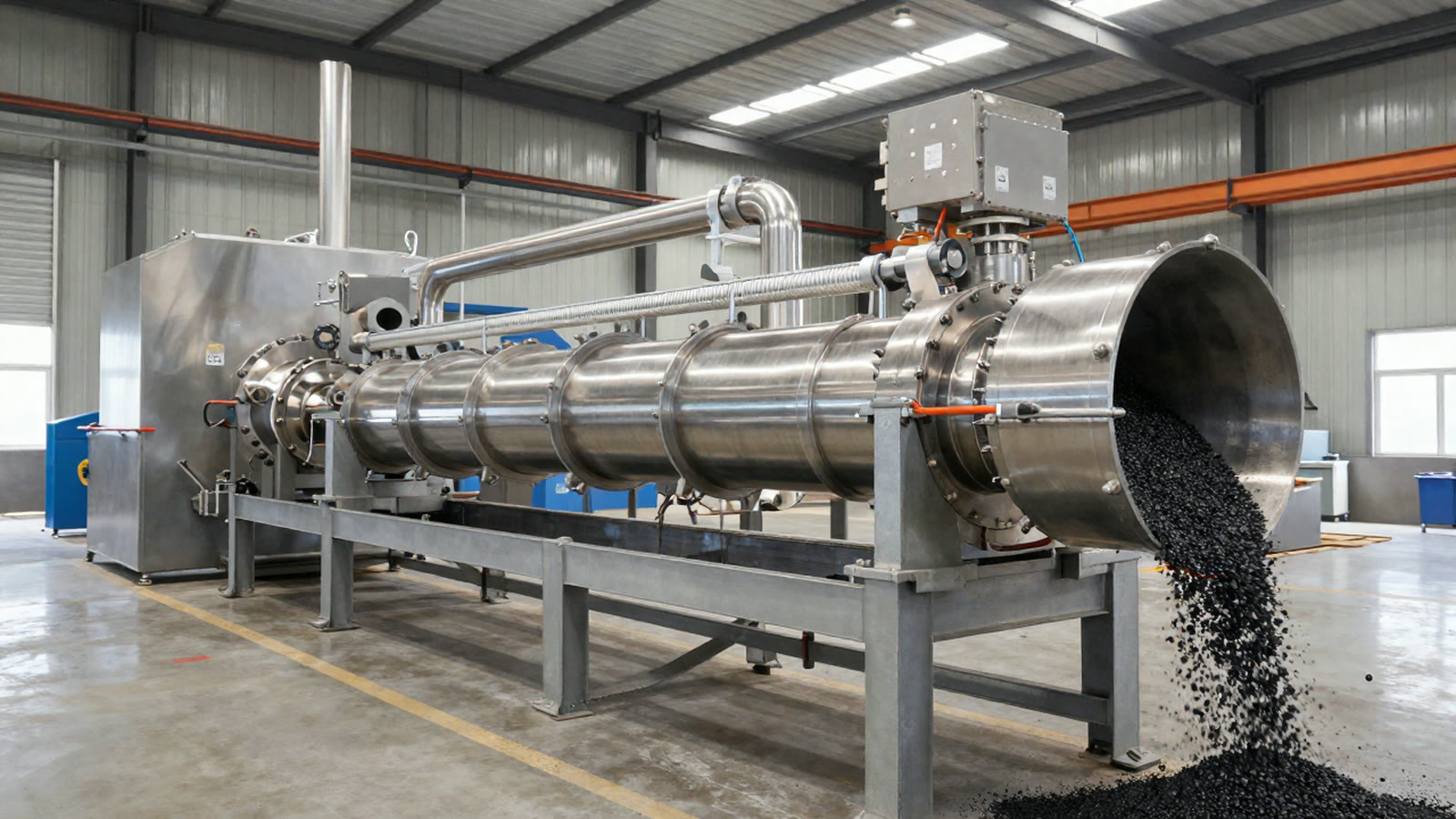
According to the "Conductive Network Formation" scope in this chapter, connect network points frame by frame: the connected lines represent the conductive pathways described in the data.Scroll-driven, animated frame by frame with requestAnimationFrame; when the system requests reduced motion or the screen is narrow, the final frame is shown directly.
R1618 is a plastic-grade conductive carbon black hyperdispersant from Californium Curium, classified under the conductive hyperdispersant category of the hyperdispersant series. The documentation gives two dosage bases: 0.5-2% based on total carbon black weight, or 0.5%-2% based on the final plastic product. The main component is polyolefin ether, the appearance is a white milky liquid, the solids content is 12-12.7%, and it is readily soluble in water. Each data item below is annotated with the source file name and page number for traceability.
About us on this page: Californium Curium's main dispersant line is chemical dispersion—represented by the R1800 series paste-form hyperdispersants (R1800-S colour / R1800-SK white / R1800-SH black), whose molecular structure consists of an anchoring group and a solvating chain that form an encapsulation film on pigment and powder surfaces and prevent re-agglomeration by steric hindrance (Based on official product data). The plastics industry also has another category, wetting dispersion: powdered additives such as waxes, stearic acid and EBS, mainly for wetting and internal/external lubrication; our own R900A is expressly described as being for "wetting dispersion of inorganic powders with high oil absorption value," and TPS's product name is "wetting-type dispersant" (Based on official product data). These two categories are not substitutes—paste-form chemical dispersion and wetting dispersion are used in combination to raise dispersibility to a new level [company position]; the documentation for R1800-SH contains experimental records using the same formulation with polyethylene wax (Based on official product data). R1618 is one product within this chemical dispersion main line dedicated to "conductive carbon black for plastics."
Model Positioning
The full name of R1618 is "plastic-grade conductive carbon black hyperdispersant," and it belongs to the conductive hyperdispersant category. The product documentation defines it in only one sentence: a high-molecular-weight aqueous solution produced at high temperature and high pressure with a precise ratio, used for the dispersion of ultrafine conductive carbon black powders and conductive carbon black masterbatch. (Based on official product data)
Its difference from other models in the same series is expressly stated in the documentation: "R1618 hyperdispersant is specially developed for conductive carbon black in plastics and is a hyperdispersant with conductive function." In the same paragraph, the documentation states in parallel that D3-A is intended for waterborne conductive carbon black in plastics, and NMTG-3278 is intended for carbon nanotube super-conductive carbon black. (Based on official product data)
Commonly Reported Customer Issues: Where Do Black Spots, Pitting and Gel Spots (Fisheyes) Come From
These three terms are the most frequently complained-about phenomena on colour masterbatch and filled masterbatch production lines. The documentation breaks down the causes in detail so that they can be checked one by one against the production line:
- Gel spots (fisheyes): The documentation states: "After the filler dosage is increased, plasticization of the material slows down, melt strength decreases, melt pressure drops, and the powder in the melt is difficult to disperse, producing gel spots, thereby affecting the quality of the colour masterbatch and increasing the reject rate." The lubricating system entry further states: "Insufficient internal slip: plastic masterbatch tends to cause poor dispersion and produce gel spots." (Based on official product data)
- Pitting and screen blocking: The documentation states that blow-moulding-grade calcium carbonate/talc filled compounds showing "small granular pitting" have three causes, the third of which is "because the powder is too fine; the finer the powder, the more easily it agglomerates, and without a good dispersant it cannot be dispersed." It also contains the statement "the blow-moulding machine screen becomes blocked with lumps of unmelted foreign matter"—that is, "screen blocking" and "pitting" are treated as the same section of problems in this document. (Based on official product data)
- Black spots
- The documentation gives the cause as "poor pigment dispersion in the colour masterbatch granules, with agglomeration, resulting in uneven colour shading of the coating film and even black spots caused by dispersion." (Based on official product data)
The documentation defines "dispersion" as a three-step process: wetting, refinement (dispersion), and stabilisation after refinement (encapsulation)—if any one of the three steps is missing, the above phenomena will occur. (Based on official product data)
A boundary must be made clear: the above causes and troubleshooting criteria come from the general sections of the R1800 series pages and the 1.09 main volume in the same manual; the specification page for R1618 itself does not list measured comparison data for the above phenomena (such as dispersion fineness, black spot counts or resistivity curves). This article does not transfer data from other models to R1618.
Core Composition
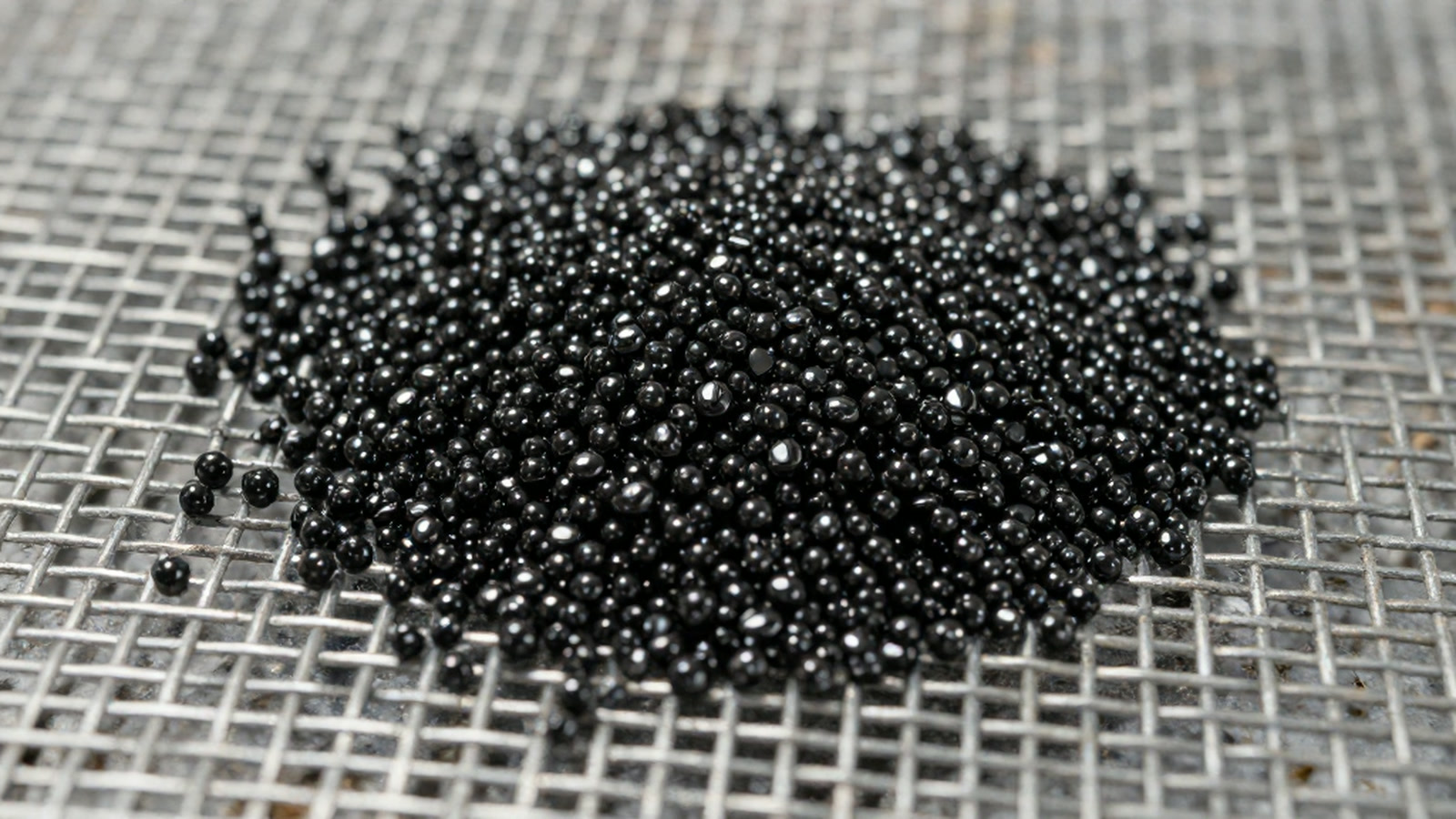
The documentation describes the core composition in only one word, reproduced verbatim:
Polyolefin ether
(Based on official product data);
The documentation does not list the monomer type, degree of polymerisation, molecular weight value or solvent system composition. It should be noted that the main text of the manual contains the qualitative description "excellent molecular weight and a fairly narrow molecular weight distribution," but no specific molecular weight figure is given, so this article does not state a numerical value.
Key Parameter Table
The following table is taken item by item from the [Physical and Chemical Properties] section of the product documentation, reproduced exactly without conversion and without merging wording from different sources:
| Test item | Technical specification | Source |
|---|---|---|
| Appearance | White milky liquid | Official product data |
| Density | 1.210 g/cm³ | Same as above |
| Solids content | 12-12.7% | Same as above |
| pH value | 6.8-7 (Based on official product data) | Same as above |
| Viscosity | 200-600 mPas | Same as above |
| Solubility | Readily soluble in water | Same as above |
Items not listed in the documentation (this article does not supplement or infer them): molecular weight value, particle size, flash point, freezing point, storage stability data, conductive performance values (such as surface resistivity or volume resistivity), VOC content, heavy metal content.
Regarding the pH value row, its original form must be preserved: the source text reads "pH value: 6.8-7mgKOH/g", and the unit after the value differs from the common dimensionless pH notation. This article does not rewrite the source text, but during model selection it is recommended to confirm the measurement basis of this item with the technical party.
Recommended Dosage and Typical Applications
On the same page, the documentation gives two dosage bases, which apply to different subjects; it is recommended to select according to one's own formulation basis:
- Based on total carbon black weight: 0.5-2% (Based on official product data)
- Based on the final plastic product: 0.5%-2% (source text: [Dosage] section, listed as a separate item)
- Packaging
- 25kg/PE plastic drum; storage: cool and dry place, protect from moisture
(Based on official product data);
The typical applications listed in the documentation are divided into two categories, reproduced verbatim:
Antistatic products: conductive foam tubes, charge rollers, static eliminators, antistatic conveyor belts, antistatic rubber sheets, antistatic boxes, hollow sheets, antistatic pipes, medical rubber products, carpets, copier rollers, printer rollers, electronic component packaging films, explosion-proof cables; also antistatic mats, antistatic shoe soles, etc.
Conductive products: cable shielding materials, planar heating elements, conductive films, elastic electrodes,circuits, conductive coatings, conductive inks, conductive fibres, conductive leather products and adhesives; mining conveyor belts, mining plastics pipes, mining ventilation ducts, etc.
(Based on official product data)
How to Choose Among Comparable Products
conductive hyperdispersant
R1618 hyperdispersant is a hyperdispersant with conductive function, developed specifically for plastic conductive carbon black. D3-A hyperdispersant is a hyperdispersant with conductive and super-conductive functions, developed specifically for water-based conductive carbon black for plastics. NMTG-3278 hyperdispersant is a hyperdispersant with super-conductive function, developed specifically for carbon nanotube super-conductive carbon black.
(Based on official product data)
Based on this sentence, model selection should first be divided into two matters, rather than first comparing dispersing capability:
| Your system | Corresponding model in the documentation | Basis |
|---|---|---|
| Conductive carbon black in plastics systems (dry blending, masterbatch production) | R1618 | Official product data |
| Water-based / immersion-type super-conductive carbon black | D3-A | ; D3-A main page, PDF (Based on official product data) |
| Carbon nanotube super-conductive carbon black | NMTG-3278 | Official product data |
immersion-type super-conductive electronic products are best used together with R810 (dosage 2%)
of total formulation weight
What needs to be left blank: the documentation does not provide comparative data on dispersing effect, conductivity or dispersion fineness for the three models in the same carbon black system; therefore this article does not make a quality comparison. For the individual detail pages of the three models, see R1618, D3-A, and NMTG-3278; for the series-level statement, see hyperdispersant series.
Chemical Dispersion × Wetting Dispersion: How the Two Types of Additives Work Together
There is a set of item-by-item comparisons in the documentation that can be checked verbatim: the R1800-SK page states in the original text — “It has very good compatibility with all rubbers and plastics. Its lubricating performance is 26 times that of wax, and its dispersing performance is 113 times that of wax.” (Based on official product data)
dispersing performance
The correct complete statement consists of two coexisting points:
- Item-by-item comparison: for the two items “dispersing performance” and “lubricating performance”, the R1800-SK documentation gives the multiples relative to wax (as above, checkable verbatim);
- Complete solution: chemical dispersion (R1800 series paste-form hyperdispersant) is used together with wetting dispersion (powdered additives such as wax / stearic acid / EBS, or our R900A) to push dispersibility to a new level [company position]. The verifiable point in the documentation is the R1800-SH experiment: the raw materials column includes “polyethylene wax from Indonesia”; the experimental formulation is “carbon black DK2028P 50g, R1800-SH 1g / polyethylene wax 10g / LLDPE218W 39g”; the process is “first add carbon black, R1800-SH hyperdispersant and polyethylene wax into a high-speed mixer and stir; when the temperature reaches about 110℃, add LLDPE218W” — the paste-form chemical type and the wax type are used together in the same formulation, and there are experimental records that can be checked. (Based on official product data)
This article does not treat wax, stearic acid or EBS as competing products or as objects that are “replaced”: they are two different dispersion routes from ours. Which route to choose, and whether to use both routes together, depends on your powder, resin and equipment conditions, and should be determined by small-scale trial results.
Access to Technical Documentation and Samples
Californium Curium
- Address: Room 109-110, Building 2, No. 42, Mulun Chuangye 1st Road, Changping Town, Dongguan, Guangdong Province, China
- Tel: +86 136 3650 0188
- Email: kj9896@126.com
our technical personnel will arrive at the customer’s site at the first opportunity
Product technical data are laboratory typical values; before mass production, please conduct small-scale trial verification. The plasticizing capacity of extrusion equipment (single-screw and twin-screw differ significantly), raw material batches and the lubrication system in the formulation all affect the final dosage, and need to be confirmed by re-testing on the production line.
For the product data scope and source citation method on this website, see [product page data source notes](Based on official product data).
Data and Basis Notes
All parameters and descriptions in this article come from official product data; items not listed in the official materials are annotated item by item in Section 3. Sentences marked [company position] are the company's stance and are not quoted source text. This article contains no prices, customer names, certificate numbers or performance commitments; the publicly available materials on this site contain no third-party test-report numbers — for such documents, please contact the technical team.
Article actions
If this piece was useful, you can leave a mark — the like count comes from our back office at admin.kj9896.com; when the endpoint is unreachable the buttons are disabled and the count shows “—”. No invented figures are ever filled in.
Link: https://kj9896.com/en/news/r1618-conductive-carbon-black-hyperdispersant
Related reading
- 01Californium Curium R200 Magnesium Hydroxide/Aluminium Hydroxide Flame-Retardant Aid: Measured Comparison and Usage27 September 2026
- 02R1848 encapsulation-type hyperdispersant: approaches to the difficult dispersion and heavy dusting of aluminium silver powder in plastics2 October 2026
- 03Californium Curium R915 Polyester-Grade Transparent Halogen-Free Flame Retardant: Technical Data Sheet and Processing Window27 September 2026
Products mentioned in this article
- R1618R1618 Conductive Carbon Black Dispersant R1618
- R1800-SR1800-S Hyperdispersant R1800-S
- R1800-SKR1800-SK Hyperdispersant R1800-SK
- R1800-SHR1800-SH Hyperdispersant R1800-SH
- D3-AD3-A Aqueous Conductive Dispersant D3-A
- NMTG-3278NMTG-3278 CNT Hyperdispersant NMTG-3278
- R900AR900A Liquid Color Masterbatch Base R900A
- TPSTPS Alkyl Ester Wetting Dispersant TPS
Keep reading
More company announcements and product updates are in the newsroom.