
Product technology · 12 October 2026
R1800-SK and R900A for flame-retardant dispersion without affecting flame retardancy
R1800-SK and R900A work with any flame retardant and any flame-retardant masterbatch, in any form: powder, liquid or granular; the dispersion is achievable and flame-retardant performance is not affected. This article gives the mechanism, the measured data from the technical documentation and the 1.6% dosage turning point.
- p.5Source of physical and chemical properties
- p.7Titanium dioxide test
- 8 gradesSame dispersant for all masterbatch formulations
Moved from the bodyFirst data table in this article (as quoted)
| Masterbatch grade | Base resin / system | Addition level | Flame-retardant rating | Dispersant used in the formulation |
|---|---|---|---|---|
| R911 | PE halogen-free flame retardant | 10%–20% | UL94 V-2 / FV-2 | R1800-SK |
| R912 | Transparent type, for PET / PETG / TPU | 1.5%–3% | UL94 V-2 / V-0 | R1800-SK |
| R912B | PET halogen-free flame retardant | 1.5%–5% | UL94 V-0 · LOI ≥38% | R1800-SK |
| R915 | Transparent halogen-free, for PET / PETG | Masterbatch 20%–30% | Halogen-free, low smoke | R1800-SK |
| M911 | Flame-retardant masterbatch | Not listed | Not listed | R1800-SK |
| M915 | Flame-retardant masterbatch | Not listed | Not listed | R1800-SK |
| M918 | Flame-retardant masterbatch | Not listed | Not listed | R1800-SK |
| M830 | Flame-retardant masterbatch | Not listed | Not listed | R1800-SK |
R1800-SK and R900A can be used with any flame retardant, and with any flame-retardant masterbatch, in any form: powder additives, liquid additives, granular flame-retardant masterbatch. The dispersion can be achieved, and flame-retardant performance is not affected. This is not a slogan. What follows sets out the mechanism and the measured data from the technical documentation that show why it holds.
Start with the problem that has to be solved
The flame-retardant masterbatch is produced, yet the UL94 grade jumps between V-2 and V-0; dripping behaviour is unstable and the colour mottles. The usual engineering lines of investigation are to change the flame-retardant batch, adjust the screw configuration or lengthen the residence time, but the problem is often not in the flame retardant itself.
The great majority of flame retardants are solid powders insoluble in the resin: brominated systems are crystalline powders, phosphorus systems are white powders or crystals, nitrogen systems are needle-like or plate-like crystals, and inorganic hydroxides are mineral powders. In the resin they must be "broken down to the level of primary particles and held there" before flame-retardant efficiency corresponds to the loading. Once the powder agglomerates, the same 15% loading leaves a much smaller effective surface area actually taking part in flame retardancy, and this shows up as "the same formulation giving a different grade from batch to batch".
A dispersant addresses exactly this: it keeps the particles at a spacing in the melt.
There is a usual concern here: a dispersant is an organic substance, so does adding one to a flame-retardant system drag down the flame-retardant performance? Kaicu answers this with mechanism and measured data, not with slogans.
How R1800-SK opens up the powder
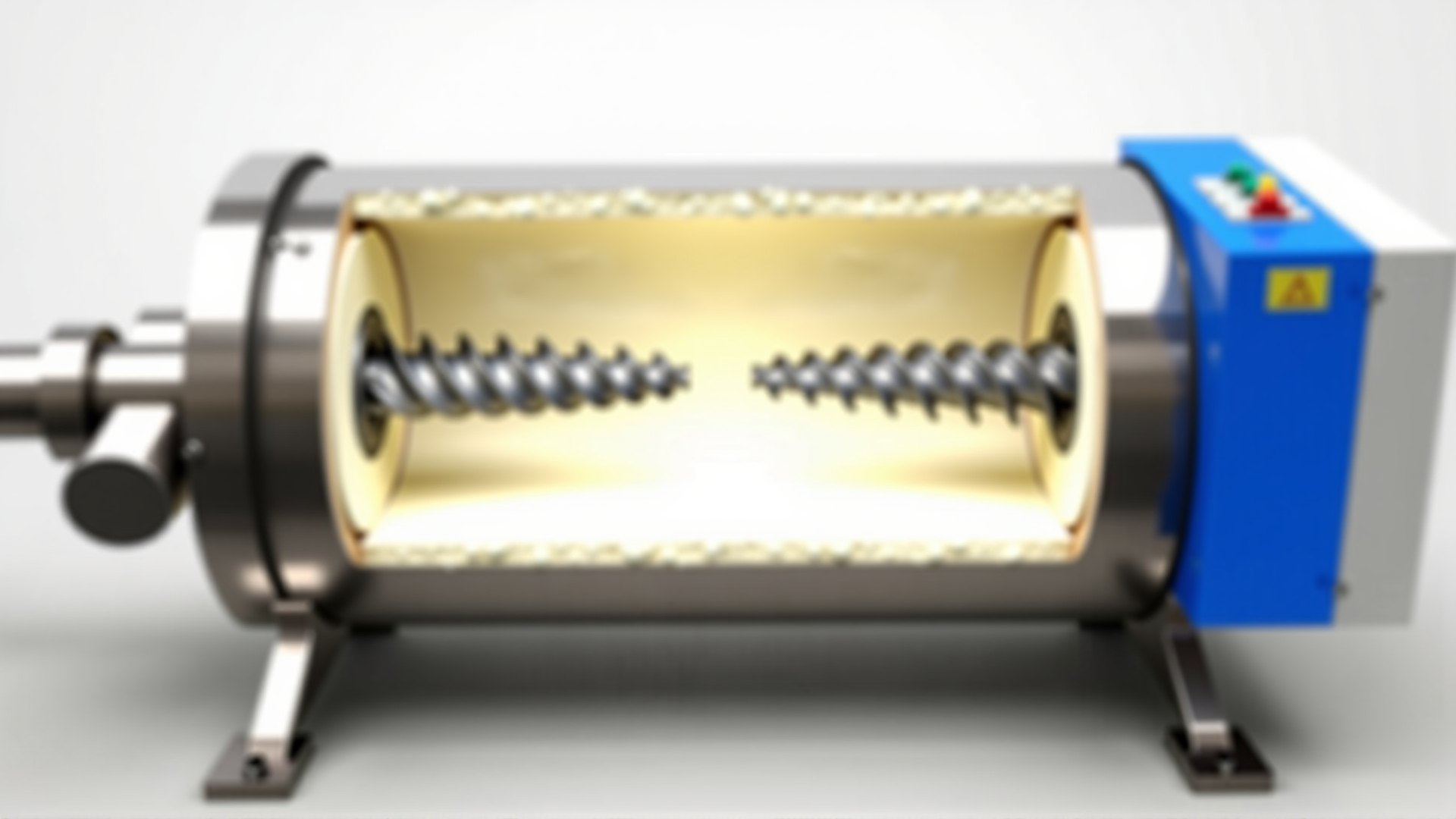
The molecular structure of R1800-SK has two parts. The wording of the technical documentation is:
- Anchoring groups (-COOH) — polar groups that adsorb onto the powder surface through ionic bonds, hydrogen bonds and van der Waals forces. What the documentation emphasises is "tight adsorption" and "preventing desorption of R1800-SK".
- Solvating chains — extend into the medium and determine the stability after dispersion.
Temperature is the key. The documentation states: below 70℃ the coating layer does not melt; above 70℃ it begins to melt, converts into ionic coupling and improves compatibility with the resin.
This is not a detail written down casually. The powder stage requires "hold the particle firmly and allow no further agglomeration"; at the melting temperature it requires "let go and become compatible with the resin" — two opposite requirements, and R1800-SK meets both with a single temperature switching point.
The documentation is equally specific about the mechanism of stable dispersion: when pigment particles carrying adsorbed R1800-SK approach one another, the repulsion of the adsorption layers makes the particles push each other apart — the spacing is not maintained by continuous stirring but held open by the adsorption layers themselves.
What these two dispersants are
| Item | R1800-SK | R900A |
|---|---|---|
| Product positioning | Polyolefin ether hyperdispersant series | General product catalogue · liquid colour masterbatch route |
| Ionic type | Non-ionic | Non-ionic |
| Appearance | Blue paste-like substance | Not listed in the documentation |
| Density | 1.190 g/cm³ | Not listed in the documentation |
| Viscosity | 980–3600 mPa·s | Not listed in the documentation |
| Acid value | 6.8–7 mgKOH/g | Not listed in the documentation |
| Amine value | ≦9 mgKOH/g | Not listed in the documentation |
| Flash point | 285℃ | Not listed in the documentation |
| Degree of dispersion | III | Not listed in the documentation |
| Compatibility | Very good compatibility with all rubbers and plastics | Applicable to the addition of almost any plastic or rubber |
Both are non-ionic. This is the premise on which the article stands — a non-ionic product carries no charge and does not compete with the ionic components in a flame-retardant system.
Which flame retardants exist, and why changing to another does not affect flame retardancy
Same-dimension range intersection (℃ · 2 objects)
Dimension · ℃X-axis = dimension ℃; colored band = target interval where the object can fall; points outside the band = portions that cannot be reached.
- Target band
- Brominated
- 335–345℃
- Inorganic
- 300–320℃
- X-axis same dimension ℃ ·
- X-axis scale based on this article's max (300–345 ℃); do not directly compare lengths across articles.
- Brominated335–345 ℃
- Inorganic300–320 ℃
Chart data (source text verbatim)
| Object | Range |
|---|---|
| Brominated | 335–345 ℃ |
| Inorganic | 300–320 ℃ |
Source textScale 270–380 ℃
This is the core question of the article. The engineering concern about whether a dispersant drags down flame retardancy usually comes from an implicit assumption: that there may be a chemical interaction between the dispersant and a given flame retardant. To judge whether that assumption holds, the flame retardants must first be separated by mechanism of action, and then it must be seen which step the dispersant intervenes in.
By chemical composition and mechanism of action, industrial flame retardants can be grouped into the families below. The mechanism column gives only the recognised flame-retardant pathway of the family, not formulation details irrelevant to this article.
| Family | Representative grades (common abbreviation) | Main components | Main flame-retardant pathway | Processing temperature range |
|---|---|---|---|---|
| Brominated | Decabromodiphenyl ethane (DBDPE) | Aromatic bromide, bromine content about 82% | Gas phase: releases bromine radicals on heating and interrupts the combustion chain reaction | Melting point about 335–345℃, 1% thermal weight loss ≥ 350℃ |
| Brominated | Brominated polystyrene (BPS) | Brominated polystyrene, about 66% bromine | Gas-phase termination of halogen radical chains | 1% thermal weight loss ≥ 300℃ |
| Brominated synergist | Antimony trioxide (Sb₂O₃) | Antimony oxide | Reacts with hydrogen halide to form antimony halide, strengthening gas-phase termination | Does not decompose itself, follows the system |
| Phosphorus | Aluminium diethylphosphinate (ADP) | Organic aluminium phosphinate salt, about 23–24% phosphorus | Condensed phase: catalyses dehydration and crosslinking into char | Decomposition temperature > 370℃ (activated type) |
| Phosphorus | Ammonium polyphosphate (APP) | Nitrogen-containing phosphate, phase I / phase II | Condensed-phase char formation plus gas-phase dilution, the main acid source in intumescent systems | Phase II has low water solubility and suits high-temperature processing |
| Phosphorus | DOPO and its derivatives | Phosphaphenanthrene oxide | Reactive type, covalently incorporated into the epoxy network | Curing systems, not melt processing |
| Nitrogen | Melamine cyanurate (MCA) | Addition salt of melamine and cyanuric acid | Endothermic sublimation on heating plus dilution of combustible gas | Stable at 300℃, endothermic decomposition at about 350℃ |
| Nitrogen | Melamine polyphosphate (MPP) | Melamine phosphate | Phosphorus–nitrogen synergy, char formation plus expansion | Same order as APP |
| Inorganic | Aluminium hydroxide (ATH) | Aluminium trihydrate | Endothermic decomposition releasing water of crystallisation, diluting and cooling | Starts dehydrating at about 200℃, loadings often 50–65% |
| Inorganic | Magnesium hydroxide (MDH) | Magnesium hydroxide | Same as ATH but higher temperature resistance | Endothermic decomposition at about 300–320℃ |
| Inorganic | Zinc borate / expandable graphite | Borate / layered graphite | Char formation, smoke suppression, anti-dripping | Follows the system |
| Intumescent | IFR composite system | APP + pentaerythritol + melamine | Acid source / carbon source / gas source form an intumescent char | Follows the system |
This table makes only one point: the working position of every family above lies at the level of "the flame retardant itself decomposing on heating or taking part in char formation or gas-phase reaction". The dispersant is not on that chain — its anchoring groups adsorb on the powder surface and its solvating chains extend into the melt; both actions are interfacial physical behaviour. They do not enter the decomposition pathway of the flame retardant, do not consume halogen radicals, do not take part in dehydration and char formation, and do not change the conditions under which the intumescent layer forms.
So the answer to "does changing the flame retardant affect flame retardancy" depends on whether the dispersant undergoes a chemical reaction with that family, not on whether the family is brominated or phosphorus-based. R1800-SK and R900A are both non-ionic and carry no dissociable groups: they are not treated as a reaction partner by halogen systems, nor do they compete for adsorption with the acidic sites of phosphorus systems — their role in every family is the same: to disperse the powder.
Kaicu's own eight flame-retardant masterbatches are a real-world sample of this judgement: eight grades, different flame-retardant systems and base resins, all formulated with the same dispersant.
How to read this table needs to be stated: the addition levels and flame-retardant ratings of the first four grades (R911 / R912 / R912B / R915) are found in the current public technical documentation and can be quoted directly; for the last four grades (M911 / M915 / M918 / M830) the current public documentation confirms only one item, "the dispersant used in the formulation is R1800-SK"; their addition levels and flame-retardant ratings do not appear in the public documentation and are recorded as "not listed"; this article makes no inference about them.
This can be cross-checked in three places in the documentation: the "core component — dispersion aid" column of the R912B technical data gives the dispersant as a non-ionic surfactant; the compatibility entry for R1800-SK states "very good compatibility with all rubbers and plastics"; and R900A states "applicable to the addition of almost any plastic or rubber". None of the three restricts the scope of application to a particular flame retardant or a particular base resin.
At a constant 70℃, the R1800-SK surface treatment of titanium dioxide was swept over 0.3%–2%; the only measured point is 1.6%.
The dosage turning point: 1.6%, and it reverses
This is the only set of point-by-point measured data in the article, taken from the surface-treatment experiment of R1800-SK on titanium dioxide: seven dosage points under constant conditions of pH 6.8 and 70℃.
| Dosage % | Lightness L | Tünber whiteness | Yellowness YI |
|---|---|---|---|
| 0 | 88.27 | 75.15 | 4.63 |
| 0.5 | 88.89 | 75.76 | 4.21 |
| 1.0 | 89.12 | 76.31 | 4.34 |
| 1.2 | 89.87 | 76.35 | 4.23 |
| 1.6 | 90.18 | 77.76 | 3.84 |
| 1.8 | 88.26 | 75.81 | 3.97 |
| 2.0 | 87.83 | 75.79 | 3.89 |
All three indices reach their optimum at 1.6% at the same time: highest lightness 90.18, highest whiteness 77.76, lowest yellowness 3.84.
- Measured point1 point
- Trend (dashed line, not measured)0.3%–2%
The manual gives only one measured optical density value at 1.6%: 0.386; point-by-point data between 0.3%–1.6% and 1.6%–2% are not provided, and the dashed line indicates shape only, not measured data.
Data boundary: The vertical axis has no measured scale values: the source gives no point-by-point optical density values under this condition, so this figure does not interpolate or add points.
- Lightness L88.27 → 90.18 (peak) → 87.83
- Tünber whiteness75.15 → 77.76 (peak) → 75.79
- Yellowness YI4.63 → 3.84 (minimum) → 3.89
All three indicators reach their optimum at the same dosage point of 1.6%: the highest lightness 90.18, the highest Tünber whiteness 77.76, and the lowest yellowness 3.84. This is the only set of point-by-point measured data in the whole document.
Data boundary: The three curves use independent vertical axes (different dimensions: lightness/whiteness are dimensionless indices, yellowness YI is a colour-difference index); vertical position is used only to distinguish each shape, and values must not be compared across tracks.
The mechanism given in the documentation is: as the dosage increases, more anchoring groups adsorb onto the pigment surface, reaching saturation at 1.6%, where the optical density is at its maximum (0.386); as the dosage increases further, the R1800-SK molecules interact with one another and entangle through their solvating chains to form "bridging flocculation", and the optical density falls sharply instead.
The conclusion as worded in the documentation:
A dosage of 1.6% of the R1800-SK hyperdispersant gives the best result when treating titanium dioxide
This is a counter-example to "the more the better". An excess of hyperdispersant bridges the pigment particles by itself, and the result gets worse.
In addition, the addition level given in the documentation is 0.5%–1% of the final plastic product. Note that this 0.5%–1% and the 1.6% above have different denominators — the former is the finished plastic, the latter is a treatment level relative to the pigment, and the two numbers cannot be interchanged.
Why it does not affect flame retardancy
The documentation lists four functions of the hyperdispersant in the masterbatch:
- Preventing agglomeration of pigment and filler — it wets and bonds with the powder and, as the temperature falls, forms a coating layer that blocks further agglomeration
- Raising the distribution of the filler in the resin — it is compatible with the resin during extrusion and joins the coated powder and the resin into one body
- Ensuring good melt flow and improving the surface gloss of the part
- Fusing with the resin more effectively
All four point to "physical dispersion" and "processing performance"; none points to chemical participation or to a flame-retardancy mechanism.
The boundary of the conclusion must be stated: the "does not affect flame retardancy" of this article rests on the dispersant's mechanism of action not intervening in the flame-retardant reaction; it is not based on a family-by-family comparative UL94 test covering all flame-retardant families. The direct evidence in Kaicu's public technical documentation is that in the R912B formulation the dispersant is also listed as a "dispersion aid", and that the compatibility statements for R1800-SK / R900A cover "all rubbers and plastics" and "any plastic or rubber"; the documentation gives no separate comparative test data for families such as brominated systems or inorganic hydroxides, and this article makes no inference.
How to read 113 times and 26 times
The technical data for R1800-SK gives two relative multiples: dispersing performance 113 times and lubricating performance 26 times.
The object of comparison for both figures is wax; they are relative statements within the same technical documentation, and the documentation gives neither the corresponding test method nor a third-party report. The correct reading is "the dispersing / lubricating performance relative to wax", not "113 times can be achieved in any system", and the figures cannot be converted directly against the 1.6% turning point — the denominator of one is a performance comparison, the denominator of the other is a pigment treatment level.
A few practical judgements for formulators
Q: Check for agglomeration first, then change the flame retardant。Basis: Grade drift between batches of the same formulation is a typical sign of agglomeration。Limit: Batch variation and moisture in the flame retardant itself must be ruled out。
Q: Trial the dispersant dosage around 1.6% on the pigment / powder。Basis: The measured optimum in the titanium dioxide system is at 1.6%。Limit: The optimum dosage for other powders needs in-house bench trials; the documentation does not cover it。
Q: Use 0.5%–1% as the reference addition level in the finished plastic。Basis: The addition level for the final plastic product given in the documentation。Limit: Not the same denominator as 1.6%; the two cannot be interchanged。
Q: In halogen systems, check the synergist ratio as well。Basis: The synergy between the halogen and Sb₂O₃ works through the gas phase。Limit: A dispersant cannot rescue the rating when the synergist is missing。
Q: In inorganic hydroxide systems, focus on dispersion rather than synergy。Basis: ATH/MDH work by endothermic decomposition and dilution, often at loadings above 50%。Limit: Under high filling, poor dispersion first shows up as a loss of mechanical properties。
Q: When switching families, run a bench trial before looking at the rating。Basis: Dispersion is a physical process and does not conflict with flame-retardant chemistry。Limit: Compatibility and processing window in that system still have to be confirmed by test。
A dispersant is not a flame retardant and should not be evaluated as one. Its delivery criterion is "whether the powder is uniformly dispersed and held that way", and that criterion is the same thing in brominated, phosphorus, nitrogen, inorganic and intumescent systems.
Article actions
If this piece was useful, you can leave a mark — the like count comes from our back office at admin.kj9896.com; when the endpoint is unreachable the buttons are disabled and the count shows “—”. No invented figures are ever filled in.
Link: https://kj9896.com/en/news/r900a-r1800sk-dispersion-turning-point
Related reading
- 01R1800-SH Carbon Black Superdispersant: 28 Times the Lubrication and 122 Times the Dispersion of Wax22 October 2026
- 02E099 Superdispersant for Fluoroplastics: Dispersion Stability, Compatibility and Processing in the 200–400°C Window22 October 2026
- 03R101A Polyol-Modified Organosilicon: the Third Generation of Titanium Dioxide Organic Coating Agents22 October 2026
Products mentioned in this article
- R1800-SKR1800-SK Hyperdispersant R1800-SK
- R900AR900A Liquid Color Masterbatch Base R900A
- R911R911 PE Halogen-Free FR R911
- R912R912 Transparent Halogen-Free FR R912
- R912BR912B Halogen-Free Flame Retardant for PET R912B
- R915R915 PET/PETG Transparent FR R915
- M911M911 PE Halogen-free Flame Retardant Masterbatch M911
- M915M915 PETG Transparent Halogen-free FR Masterbatch M915
- M830M830 PE/PP/PET/PA Plastic Softener Masterbatch M830
- M918M918 PA6 Nylon Spinning Halogen-free FR Masterbatch M918
Looking for a quick reference?
- Which flame-retardant systems can use R1800-SK and R900A?
- R1800-SK and R900A disperse flame retardants and flame-retardant masterbatches of any material without impairing flame retardancy. This is not a test report or certification for an individual formulation. Ratings require actual test records.
- Is M830 a flame-retardant masterbatch?
- M830 is a plastic softening masterbatch containing R830. It is not a flame-retardant family member or evidence of cross-mechanism testing. R-series flame-retardant additives must not all be called masterbatches.
Keep reading
More company announcements and product updates are in the newsroom.