
Technology explained · 28 September 2026
Exudation and blooming: why your dispersant is not working
- 01Anti-agglomeration
- 02Distribution rate
- 03Lubrication balance
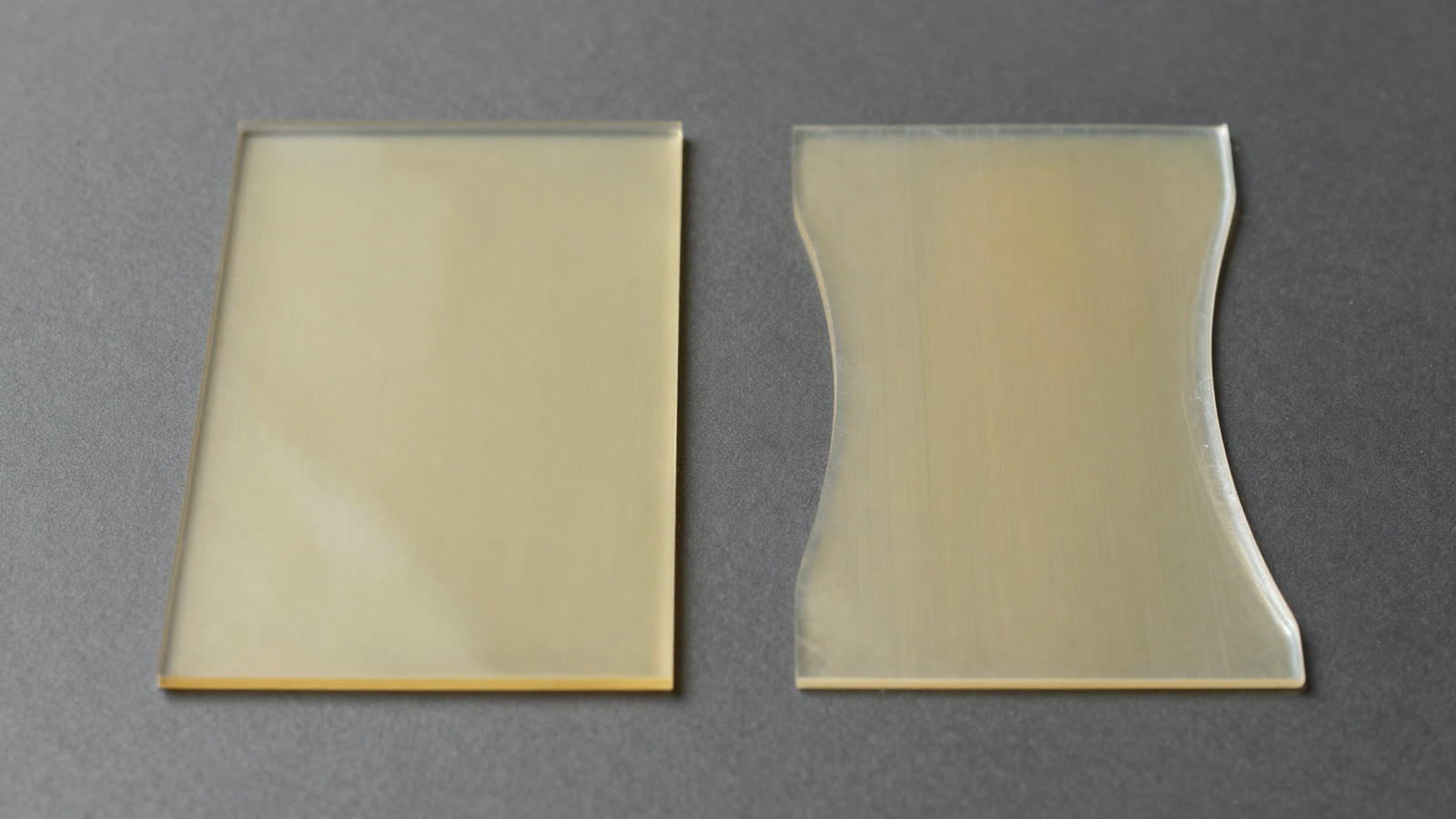
Exudation, blooming, frosting and carbon deposit are often used interchangeably, but their causes are not the same. This article separates them according to the source documentation: excessive external lubrication, paraffin wax cut into low molecular weight wax, failure to cross the wetting temperature threshold, and dosage beyond the inflection point. At the end, a “symptom → cause” comparison table, a five-step field troubleshooting procedure and a three-layer formulation structure are also provided, and it is explained that wax, stearic acid, EBS (ethylene bis-stearamide) and paste-form hyperdispersant are not rivals but are used together; each data item is marked with the documentation page number and printed page.
- Numerical values appearing in the text: 0.05% · 10% · 40% · 70℃
- Article size: 14 sections · 3 data tables · 1 blocks already placed after first screen
- Full text arranged as "Data first → Mechanism second → Selection last", each item's source cited to printed page for traceable review
Moved from the bodyThree-layer combination table · table moved up
| Layer | Route followed | Available products | Dosage specification (original source text) |
|---|---|---|---|
| Dispersion layer | Chemical dispersion: anchoring group adsorption + solvation chain stabilisation | Paste-form hyperdispersants such as R1800-S / SK / SH, R1618; coupling-type products such as R100, R100A, R200 | R1800-S by powder fineness per table 0.2%–1% (calcium carbonate 800 mesh from 0.2%, 3000 mesh 0.5%; talc 0.32%–1%; kaolin 0.3%–0.8%); final plastic product 0.5%—1%; R100 at 0.5%-3% of inorganic filler mass; R200 at 1-3% of filler mass |
| Wetting layer | Wetting dispersion: improve surface wetting and flow | Wetting-type dispersants such as TPS (alkyl acid ester); may replace polyethylene wax in matte finish masterbatches | The source materials do not give a reference dosage for TPS (this item is not listed) |
| Lubrication layer | Internal/external lubrication balance: internal lubrication for plasticisation and flow, external lubrication for release and surface finish | Powdered additives such as low molecular weight polyethylene wax, stearic acid, EBS | The source materials do not give a uniform dosage; the position stated is “add a small amount of lubricant appropriately according to formulation requirements”; excess will cause exudation |
| Auxiliary layer | Coupling / interfacial modification | Silane coupling agent (R200 pre-treatment may be combined at 3%), charring agents and anti-dripping additives (recommended combination with R912) | See the original pages for R200 and R912 |
Connect frame by frame according to the "Symptom → Cause" mapping in this article: the sequence of connected points is the troubleshooting sequence given in the source.Scroll-driven, animated frame by frame with requestAnimationFrame; when the system requests reduced motion or the screen is narrow, the final frame is shown directly.
First, separate the four terms: exudation, blooming, frosting, carbon deposit
In field discussions, the term “exudation” is used to refer to four different problems. First, set out the original terms from the documentation:
- Frosting (bloom)
- a common problem with low molecular weight wax in colour masterbatch. The source text states: “During processing, paraffin wax decomposes and sublimates, migrates to the film surface, forms frosting, and affects seal strength.”
- Blooming
- the same type of surface phenomenon as frosting. The documentation uses it as a selling-point comparison on several products: “no blooming, no exudation, no mould sticking” (R912), “no blooming or exudation after room-temperature and double-85 hygrothermal ageing, and no oil mist on the surface of the finished article” (R915), “no migration, no exudation, no blooming” (R940), “migration rate ≤0.05% (no exudation or blooming)” (R333).
- Exudation
- the broadest scope. The documentation uses it in at least three contexts: exudation of external lubricant (scale build-up in the mould, exudation on the masterbatch surface), pigment exudation (the R902 entry reads “reduces pigment exudation tendency (effective for mild exudation)”), and “no exudation” in product descriptions.
- Carbon deposit
- deposits on the die head. The source text for R902 reads: “can reduce die-lip carbon deposit and reduce pigment exudation tendency (effective for mild exudation).”
(Source: Californium Curium – Hyperdispersant Series PDF page 3, printed page -12-; Californium Curium – Functional Additives 1.09 PDF page 54, printed page -50-; page 57, printed page -53-; page 59, printed page -55-; page 87, printed page -83-; page 71, printed page -67-)
Behind the four terms there are only three types of cause: excessive low molecular weight substances or over-lubrication in the formulation, wrong source or molecular weight of the additive itself, and poor dispersion causing particle agglomerates to appear on the surface. These are dealt with below.
First cause: excessive external lubrication — the only passage in the documentation that directly states the mechanism of exudation
Synergistic effects between hyperdispersants and raw materials in formulations
Only with a good lubrication system can the dispersant fully play its role and produce high-quality plastic products. The internal and external lubrication in the formulation must be balanced. (1) Internal lubrication benefits plasticisation and melt flow. Insufficient internal lubrication: plastic masterbatch is prone to poor dispersion, causing gel spots. Too much internal lubrication: melt strength decreases, and the strength of plastic products tends to decline. Therefore, our company’s hyperdispersants all have reasonably designed internal and external lubricating performance; according to formulation requirements, it is sufficient to add a small amount of lubricant. (2) External lubrication aids mould release and benefits the surface finish of the product. Insufficient external lubrication: this leads to high temperature at the confluence core, over-plasticisation, difficulty in discharge, increased machine current, rough and fuzzy pellet surfaces, yellowing and other problems. Too much external lubrication: exudation becomes severe, appearing as scale build-up in the mould and external-lubricant exudation on the masterbatch surface.
(Source: Californium Curium – Functional Additives 1.09 PDF page 12, printed page -8-)
Only with a good lubrication system can the dispersant fully play its role.
- Insufficient internal lubrication directly produces “poor dispersion causing gel spots”, exactly the same symptom as dispersant failure.
- Excessive internal lubrication lowers melt strength, and the mechanical properties of the product follow downward.
- Insufficient external lubrication makes pellet surfaces rough and yellow.
- The direct consequence of excessive external lubrication is exudation: scale build-up in the mould and exudation on the masterbatch surface.
For three of these four, their symptoms are often blamed on “poor dispersant” on the shop floor. The value of this page is that it lists all three sets of symptoms for the three lubrication states — insufficient / normal / excessive — at once.
Second cause: unclean provenance of the low molecular weight wax (how paraffin wax ends up on the film surface)
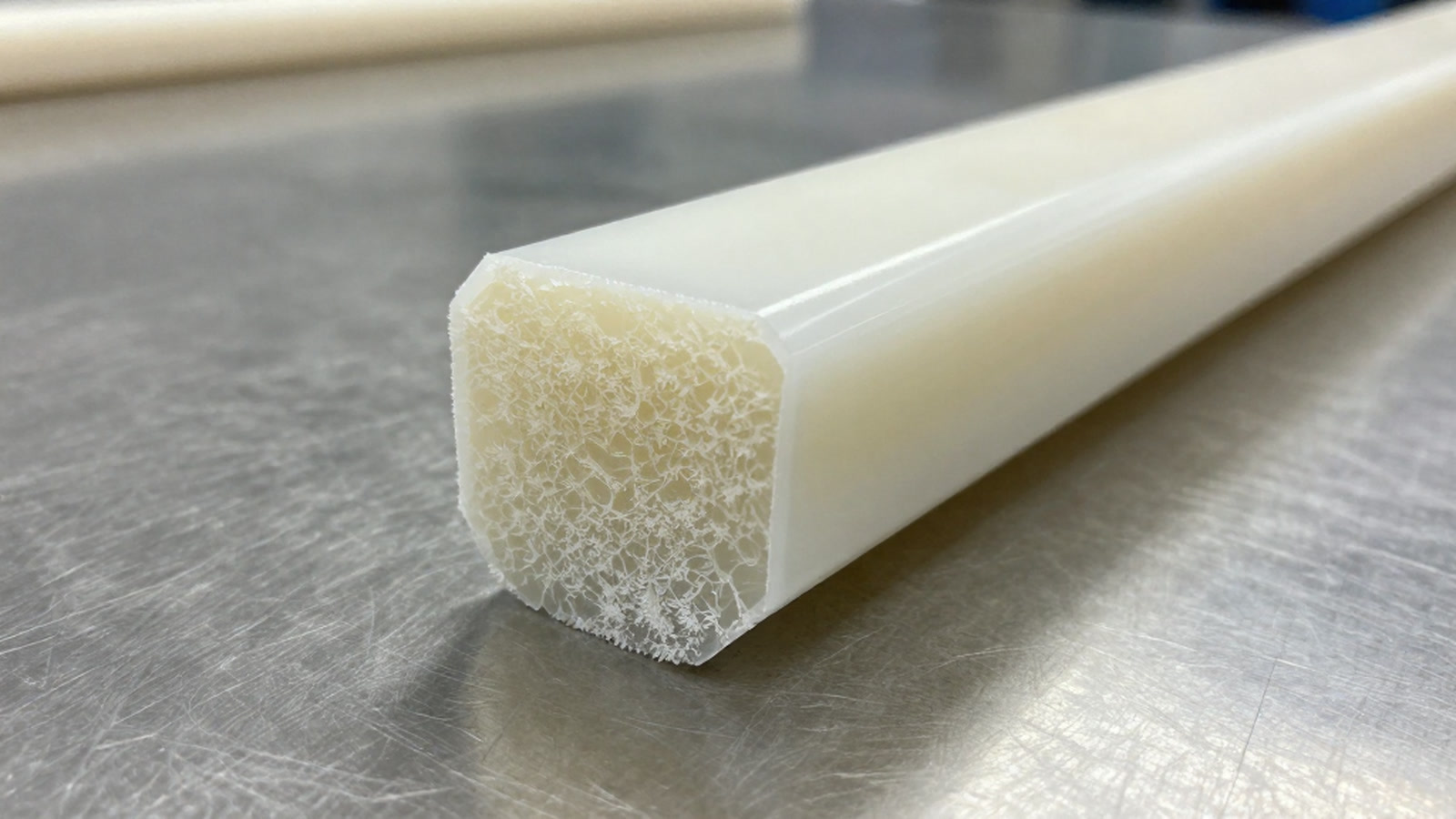
Colour masterbatch formulations almost always use low molecular weight polyethylene wax or powdered lubricants. The documentation is very blunt about one specific problem in this supply chain:
At present, some low molecular weight polyethylene wax producers, in order to reduce costs and win customers, add paraffin wax at dosages of 10%-40%. Because paraffin wax has a low molecular weight and a low melting point, and its decomposition temperature is far lower than that of low molecular weight polyethylene wax, during processing the paraffin wax decomposes and sublimates, migrates to the film surface, forms frosting, and affects seal strength. Furthermore, depending on the processing temperature, thermal decomposition of paraffin wax can also cause small-molecule substances to migrate to the surface and affect heat-sealing performance.
The next sentence gives the documentation’s recommended response:
The main function of low molecular weight polyethylene wax in colour masterbatch is dispersion and lubrication. If R1800-S hyperdispersant is used, the amount of low molecular weight polyethylene can be greatly reduced, thereby achieving the goal.
(Source: Californium Curium – Hyperdispersant Series PDF page 3, printed page -12-; the same passage also appears in Californium Curium – Functional Additives 1.09 PDF page 16, printed page -12-)
rough masterbatch surfaces
Whether the quality of the dispersant (low molecular weight polyethylene wax) is acceptable and whether the dosage is appropriate. For example, some low molecular weight polyethylene waxes are adulterated with paraffin wax, or are high-density low molecular weight polyethylene waxes; both will affect pigment dispersibility.
(Source: Californium Curium – Hyperdispersant Series PDF page 4, printed page -13-)
high-density low molecular weight polyethylene wax
Third cause: the dispersant is actually not working (three failure modes)
Three figures for R101A: 6.50 · 16.30 · 2013 (source text)
- 1.6%
- 3%
Failure mode 1: confusing “encapsulation” with “dispersion”
In discussing pitting in blow-moulding-grade filled compounds, the documentation includes this often-quoted sentence:
Actually, it is very simple: powder treatment plants generally use stearic acid or polyethylene wax to carry out an ordinary treatment. During treatment, the powder is encapsulated without having been dispersed at all. (Because stearic acid and polyethylene wax fundamentally have little dispersibility; their so-called dispersion is merely encapsulation of the powder to keep it from re-agglomerating.) Because some manufacturers consider cost and add an insufficient amount of additive to achieve encapsulation, and because the powder re-agglomerates when stored for too long, screen blockage and pitting occur.
(Source: Californium Curium – Hyperdispersant Series PDF page 3, printed page -12-; Californium Curium – Functional Additives 1.09 PDF page 16, printed page -12-)
passing off encapsulation as dispersion
Failure mode 2: the temperature threshold has not been crossed
produced from a dispersant and a coating agent under high-temperature and high-pressure conditions
- R1800-S
- “Its functional principle is that at temperatures above 80 °C, R1800-S can quickly wet the powder to achieve dispersion and encapsulation; after cooling, the coating agent solidifies. The encapsulated powder therefore will not re-agglomerate.” On the same page, the first [Prohibited uses] item states: “R1800-S hyperdispersant is prohibited for use in cold-processed powders (meaning it cannot be used without heating, because the dispersion and encapsulation effect of R1800-S hyperdispersant cannot be fully realised)”; the second item is “Prohibited in waterborne coatings and waterborne inks.”
- R1800-SK
- “At temperatures below 70℃ the coating layer will not melt; above 70℃ it begins to melt and convert into an ionic coupling agent, improving the compatibility between titanium dioxide (TiO₂) and the resin.” Its optimum surface-treatment conditions are pH = 6.8, 70℃, dosage 0.5%.
- R1800-SH
- when used in colour masterbatch, “add this product directly together with other additives into a high-speed mixer, and add the resin when the temperature reaches about 100℃”. Its optimum surface-treatment conditions are pH = 6.2, 80℃, dosage 1%.
- R100 (coupling-type hyperdispersant specially for filled masterbatch): direct addition method requires “high-speed mixing to 100-120℃ (dewatering the filler), then adding the resin and additives and high-speed mixing until the current rises”.
(Source: Californium Curium – Hyperdispersant Series PDF page 2, printed page -11-; page 3, printed page -12-; page 5, printed page -14-; page 9, printed page -18-; Californium Curium – Functional Additives 1.09 PDF page 48, printed page -44-)
Reading these points together leads to a field conclusion: mixing at insufficient temperature is equivalent to not adding the dispersant at all. The powder is not wetted, the coating layer does not form, and after cooling there is no solidified protective layer — subsequent gel spots, pitting and agglomeration are not surprising.
Failure mode 3: dosage has passed the inflection point (both underdosing and overdosing make things worse)
R1800-SK and R1800-SH were each tested in a “dosage-effect” experiment; the inflection points differ but the mechanism described is the same. The original conclusion for R1800-SK treatment of titanium dioxide reads:
When the hyperdispersant dosage is 1.6%, the optical density of the film reaches its maximum, attaining 0.386.
The same page provides a dosage–colour table (lightness / Tappi whiteness / yellowness): untreated 88.27 / 75.15 / 4.63; at 0.5%, 88.89 / 75.76 / 4.21; at 1.0%, 89.12 / 76.31 / 4.34; at 1.2%, 89.87 / 76.35 / 4.23; at 1.6%, 90.18 / 77.76 / 3.84; at 1.8%, 88.26 / 75.81 / 3.97; at 2.0%, 87.83 / 75.79 / 3.89. The documentation notes: “It can be seen from the data in the table that R1800-SK hyperdispersant has the lowest yellowness value at a dosage of 1.6%.” (Source: Californium Curium – Hyperdispersant Series PDF page 7, printed page -16-)
The original conclusion for the R1800-SH carbon black test reads:
When the hyperdispersant dosage is 3%, the optical density of the film reaches its maximum, attaining 0.487.
For the decline after the inflection point, the documentation gives the same explanation:
As the dosage of R1800-SH hyperdispersant increases further, the interaction between R1800-SH hyperdispersant molecules produces “bridging flocculation”: pigment particles flocculate through entanglement of the solvated chains of the hyperdispersant, so the optical density falls instead.
(Source: Californium Curium – Hyperdispersant Series PDF page 10, printed page -19-)
Both curves are parabolic, rising first and then falling. When the dosage is insufficient, the effect is diminished (low optical density, poor hiding power, pitting and colour spots); when the dosage is excessive, the result is even worse (bridging flocculation, agglomeration and surface defects). Therefore, the phrase “not working” may mean either too little was added or too much was added — it cannot be judged from the numbers on the formulation sheet alone; one must see where the inflection point of the effect curve lies.
Waxes, Stearic Acid and EBS Are Not Competitors but Co-formulants: the Division of Labour Between Powder-Form and Paste-Form Products
Stearic acid and polyethylene wax fundamentally have no dispersibility to speak of.
Carbon black DK2028P 50g, R1800-SH 1g, polyethylene wax 10g, LLDPE218W 39g.
wetting-type dispersant
TPS (alkyl acid ester) is a white friable solid produced by high-temperature polymerisation of an alkyl group with a fatty acid, and possesses the general chemical properties of organic carboxylic acids. Its wetting and lubricating performance is superior to that of polyethylene wax (PE wax); its wetting performance is markedly superior to that of EBS (ethylene bis-stearamide); its lubricity is comparable to EBS, but without the exudation problems of EBS. It is suitable for the plastics and rubber industries and can improve the plasticity, toughness and processing performance of materials.
The application field column states: “Used as a lubricant and wetting-type dispersant for improving processing flowability and surface wetting effect. Particularly suitable for matte finish masterbatches, where it can replace polyethylene wax and enhance the matte effect. Not recommended for high gloss masterbatches (may affect gloss).” Technical parameters are reproduced as sourced: molecular weight 320; density (20℃) 0.871 kg/m³; flash point (open cup) ≥205℃; pour point ≤55℃; boiling point 229℃; auto-ignition temperature 434℃; kinematic viscosity (100℃) 5.87 mm²/s; carbon-type analysis CA 12%. Packaging 25kg/bag, shelf life 36 months. (Source: Hyperdispersant Series PDF, page 39, printed -48-)
wetting-type dispersant
Evidence 3: The function list of paste-form hyperdispersants already includes a lubrication item. The original text of R1800-S under 【Main functions】 reads: “The main functions of R1800-S are dispersion encapsulation, lubricating release, toughening and gloss enhancement; it can be used as a slip and anti-blocking agent, can replace maleic anhydride grafting, can adjust product flow rate, and can improve product impact strength and tensile strength, etc.” Another application example states: “In the production of PVC plastic stabilisers (lead salt composite stabiliser, lead-barium composite temperature stabiliser, barium-zinc composite stabiliser, etc.), adding 0.5% R1800-S hyperdispersant enables the composite stabiliser to be more compatible with PVC, disperse more uniformly in PVC, and provide internal and external lubricating release, greatly improving the thermal stabilising effect of the product.” (Source: Hyperdispersant Series PDF, page 2, printed -11-; page 4, printed -13-)
How the two tiers are combined (this site’s position): Paste-form hyperdispersants (R1800 series) follow the chemical dispersion route — the molecular structure is divided into two segments: one is the anchoring group (-COOH), and “these polar groups, through ionic bonds, hydrogen bonds and van der Waals forces, are firmly adsorbed onto the pigment surface, preventing desorption of the hyperdispersant”; the other is the solvation chain (dispersion), which determines the stability of the dispersed pigment in the medium. (Source: Hyperdispersant Series PDF, page 5, printed -14-; page 9, printed -18-)
the powder can be dispersed apart
(There is one item the source materials do not elaborate on: the substitution relationship between the two additive types in terms of total amount and ratio. The current materials give only one specific ratio in the experimental formulations for R1800-S and R1800-SH (1g dispersant + 10g polyethylene wax). Ratios for other scenarios require separate bench-scale trials; this item is not listed in the materials.)
Symptom → Cause Reference Table (Eight Rows, All with Original Source Citations)
| On-site symptom | Cause given in the source materials (original key points) | Source (printed page) |
|---|---|---|
| Small granular pitting and screen blockage in blow-moulded filled compounds | ① The mineral source contains high-purity silica, which cannot be ground finer during milling; ② insufficient calcium carbonate fineness (mesh too low); ③ powder too fine and prone to agglomeration, cannot be dispersed apart without a good dispersant | -12- |
| Activated calcium carbonate still shows pitting and screen blockage | The treating manufacturer merely gives the powder “an ordinary treatment” with stearic acid or polyethylene wax; the powder is encapsulated before being dispersed; the additive dosage cannot achieve the encapsulation purpose; prolonged standing causes re-agglomeration | -12- |
| Colour spots on coated colour film | Poor pigment dispersion and agglomerates in colour masterbatch granules; uneven colour depth in the coated film; even black spots arising from dispersion | -12- |
| Map-like mottling of uneven depth (pattern) on coated colour film | Poor colour masterbatch dispersibility; or poor heat resistance of the pigment causing fading; or too large a difference in melt index between the colour masterbatch and the coating film resin | -12- |
| Decline in film heat-sealing performance, frosting | Paraffin wax mixed into low molecular weight polyethylene wax (dosage 10%-40%); during processing the paraffin wax decomposes and sublimes, migrating to the film surface and forming frosting | -12- |
| Filament breakage in flat yarn production | Poor colour masterbatch dispersion; pigment particles in the colour masterbatch too large; poor compatibility between carrier and resin resulting in a rough film surface; as well as process factors such as draw ratio and cooling water temperature | -12- |
| Rough surface of colour masterbatch granules, colour spots on the surface | Improper extrusion temperature or die-head temperature; poor pigment dispersibility; quality or dosage problems with the dispersant (low molecular weight polyethylene wax); inappropriate lubricating treatment of the pigment | -12-/-13- |
| Scale build-up in the mould, exudation of external lubricant on masterbatch surface | Too much external lubrication | -8- |
| Carbon deposit at the die orifice, pigment exudation (mild) | Can be improved by internal addition of R902: “reduces die orifice carbon deposit, reduces pigment exudation (effective for mild exudation), improves pigment heat resistance by 4 to 5 degrees, improves dispersion of pearlescent and fluorescent pigments, assists hydrophobing agents in enhancing hydrophobicity” | -67- |
Note: -8- is from Californium Curium – Functional Additives 1.09 PDF, page 12; -12-/-13- is from Hyperdispersant Series PDF, pages 3–4 (the same passage also appears in Californium Curium – Functional Additives 1.09, pages 16–17); -67- is from Californium Curium – Functional Additives 1.09 PDF, page 71.
Five-Step On-Site Troubleshooting (in the Order Given in the Source Materials)
- First check whether the lubrication system is balanced. Excess external lubrication will directly produce exudation (mould scale build-up, exudation on masterbatch surface), while insufficient internal lubrication will surface as dispersion problems in the form of “gel spots (fisheyes)”. At this stage there is no need to change the formulation; first read the four symptoms in that section of the source materials and match them. (Source: -8-)
- Then check the origin and molecular weight of the wax. Whether paraffin wax has been mixed in (dosage 10%-40%), and whether it is a high-density low molecular weight polyethylene wax — both of these are issues that incoming-material inspection can catch. (Source: -12-/-13-)
- Then check the temperature threshold. Paste-form hyperdispersants must be above 80℃ (above 70℃ for SK) before wetting and encapsulation can be completed; adding them directly to cold material is an expressly prohibited practice in the source materials. Whether the mixing section actually reaches temperature, and whether it is held at temperature long enough after reaching it (the pre-treatment specification for R200 is 1200rpm / 15 minutes), must be verified on site. (Source: -11-/-12-/-14-; for R200, see Californium Curium – Functional Additives 1.09, page 51, printed -47-)
- Then check whether the dosage has crossed the inflection point. Surface-treatment-type applications have two measured inflection points: SK on titanium dioxide 1.6%, SH on carbon black 3%; beyond these levels the optical density “decreases sharply instead”. (Source: -16-/-19-)
- Finally check powder fineness and morphology. Insufficient fineness produces pitting; the finer the powder, the higher the oil absorption value and the larger the specific surface area, and the higher the dispersant dosage required — “usually the finer the powder, the higher the oil absorption value and the larger the specific surface area, and the higher the dosage of dispersant added”. (Source: Californium Curium – Functional Additives 1.09 PDF, page 12, printed -8-; Hyperdispersant Series PDF, page 3, printed -12-)
after opening, it must be kept sealed to prevent moisture absorption from affecting dispersibility
How to Combine: Arranging Chemical Dispersion, Wetting Dispersion and Internal/External Lubrication into Three Layers
The first seven sections can be condensed into a formulation structure table:
(Source: Hyperdispersant Series PDF, page 2, printed -11-; page 4, printed -13-; page 39, printed -48-; Californium Curium – Functional Additives 1.09 PDF, page 12, printed -8-; pages 48–49, printed -44-/-45-; page 51, printed -47-; page 55, printed -51-)
no blooming, no exudation, no mould sticking
The R940 entry also identifies the technical route difference behind “non-migration”: “Contains methacrylic double bonds, can participate in UV/free-radical polymerisation, chemically bonded into the resin network, non-migrating, non-exuding, non-blooming, and compared with additive-type flame retardants, has less impact on transparency and mechanical properties.” In other words, one route to solving the exudation problem at its root is to make the additive participate in the reaction and become part of the system; whether an additive-type product can avoid exudation depends on three factors: molecular weight, dosage and compatibility. (Source: Californium Curium – Functional Additives 1.09 PDF, page 59, printed -55-)
FAQ
Q1: Are blooming and exudation the same thing? They are not the same term, but they belong to the same class of phenomena. In the source materials, "frosting" and "blooming" are both used to describe low-molecular-weight substances migrating to the finished article surface and forming a frost-like deposit; "exudation" is broader in scope and also includes pigment exudation and external-lubricant exudation (mould build-up). On site, it is advisable to make clear "what substance, where it comes from, and where it goes" rather than simply saying "exudation".
Q2: The dispersant dosage is already high. Why are there still pitting and gel spots (fisheyes)? Check the five locations in the order given in Section 7. The two most direct explanations provided by the source materials are: ① excessive external lubrication causes exudation, while insufficient internal lubrication "causes poor dispersion and gel spots"; ② when the temperature has not reached the threshold, the paste-form hyperdispersant has not completed wetting and encapsulation. (Source: -8-/-11-/-12-)
Q3: Can stearic acid and polyethylene wax be used at all? They can be used, but they must be placed in the right role: what they provide is wetting and internal/external lubrication, not the dispersing capability for ultrafine powders. The original wording of the source materials on these two types of additives is: "their so-called dispersion is simply wrapping the powder to make it less likely to agglomerate"; the criticism is that "the dosage does not achieve the wrapping purpose" and that "after excessive standing time, re-agglomeration occurs". (Source: -12-)
Q4: Does EBS always cause exudation? The source materials do not say "always". What can be cited is the comparison statement on the TPS page: "lubricity is comparable to EBS, but without the exudation problem of EBS" — that is, the exudation of EBS is related to the system/dosage, and switching to a wetting-type dispersant is an existing alternative route. (Source: -48-)
Q5: How to judge whether the dispersant dosage is insufficient or excessive? Look at the performance curve, not the formulation sheet. The source materials give two measured inflection points: for titanium dioxide with SK, the dosage is 1.6% (optical density 0.386, and the yellowness value is at its minimum); for carbon black with SH, the dosage is 3% (optical density 0.487). Beyond the inflection point, the optical density "drops sharply instead". First find the inflection point in your own system, and then determine the dosage. (Source: -16-/-19-)
Q6: Under what circumstances should the model be changed directly rather than adjusting the dosage? The source materials give three clear scenarios: ① do not use TPS in high-gloss masterbatch (it is not recommended for high-gloss masterbatch and may affect gloss); ② R1800-S cannot be used in waterborne coatings and waterborne inks (prohibited item); ③ where complete non-migration is required, consider the reactive route (e.g. chemical bonding into the resin with R940). (Source: -11-/-48-/-55-)
Q7: What does "effective for mild exudation" mean for R902? Take it literally: the original wording in its source text is "reduces pigment exudation (effective for mild exudation) and improves pigment heat resistance by 4 to 5 degrees". In other words, it is one of the countermeasures, but it is not effective for all degrees of exudation; severe exudation should be addressed from the formulation structure and the raw material source. The source materials do not give a threshold for judging "mild/severe" (this item is not listed in the materials and may be supplemented with a separate test report). (Source: -67-)
Q8: For mould build-up, should the mould be cleaned or the formulation changed? The source materials do not give a process recommendation, but from the mechanism point of view, both must be done: first reduce the external lubrication (otherwise build-up will recur after cleaning), then re-check the internal/external balance of the lubrication system. The sequence of mould cleaning and formulation adjustment is an on-site process decision and is outside the scope of the source materials. (Editorial position of this website)
Source references (traceable item by item)
| # | Data / quotation | Source | PDF page | Printed page |
|---|---|---|---|---|
| 1 | Four symptoms of internal/external lubrication imbalance (insufficient internal lubrication → gel spots; excessive internal lubrication → reduced melt strength; insufficient external lubrication → rough yellowish surface; excessive external lubrication → exudation, mould build-up) and "a good lubrication system is required for the dispersant to function" | Californium Curium – Functional Additives 1.09 | Page 12 | -8- |
| 2 | The finer the powder, the higher the oil absorption value and the larger the specific surface area, and the higher the dispersant dosage required; increasing filler dosage produces gel spots | Californium Curium – Functional Additives 1.09 | Page 12 | -8- |
| 3 | Three causes of pitting; stearic acid/polyethylene wax have "little dispersing effect"; incomplete wrapping and re-agglomeration; colour spots; map-like mottling; heat-seal frosting (paraffin wax blended at 10%-40%); filament breakage; rough surface | Hyperdispersant Series | Page 3 | -12- |
| 4 | Three causes of rough masterbatch surface; low molecular weight polyethylene wax blended with paraffin wax or high-density low molecular weight wax; PVC stabilizer at 0.5% for internal/external lubrication demoulding; kaolin insulation | Hyperdispersant Series | Page 4 | -13- |
| 5 | R1800-S dosage table, main function list, identification method, prohibited items (cold-processed powder, waterborne coatings and inks); 80℃ wetting and encapsulation mechanism | Hyperdispersant Series | Pages 2–3 | -11-/-12- |
| 6 | R1800-SK two-segment molecular structure (anchoring group -COOH and solvating chain), 70℃ threshold and ionic coupling agent conversion, 26x/113x comparison | Hyperdispersant Series | Page 5 | -14- |
| 7 | R1800-SK dosage inflection point 1.6%, optical density 0.386, lightness/whiteness/yellowness comparison table, optimum 70℃ | Hyperdispersant Series | Page 7 | -16- |
| 8 | R1800-SH carbon black application, resin addition at 100℃, anchoring group and solvating chain, 28x/122x comparison, optimum process PH=6.2/80℃/1% | Hyperdispersant Series | Page 9 | -18- |
| 9 | R1800-SH experimental formulation (including polyethylene wax 10g), dosage inflection point 3%, optical density 0.487, bridging flocculation explanation | Hyperdispersant Series | Page 10 | -19- |
| 10 | TPS wetting-type dispersant: wetting and lubricity superior to polyethylene wax, wetting significantly superior to EBS, lubricity comparable to EBS but without the exudation problem of EBS, can replace polyethylene wax in matte masterbatch, not recommended for high-gloss masterbatch, technical parameters and packaging | Hyperdispersant Series | Page 39 | -48- |
| 11 | R902 "(fluorine-free product)", reduced die carbon deposit, reduced pigment exudation (effective for mild exudation), heat resistance improved by 4 to 5 degrees, addition content 0.5%–5% | Californium Curium – Functional Additives 1.09 | Page 71 | -67- |
| 12 | R100 triple functions (coupling agent/encapsulating agent/hyperdispersant), three addition methods, high-speed mixing to 100-120℃ | Californium Curium – Functional Additives 1.09 | Page 48 | -44- |
| 13 | R100A four main functions, per-mille addition ratio | Californium Curium – Functional Additives 1.09 | Page 49 | -45- |
| 14 | R200 pretreatment 1:50 / 1200rpm / 15 minutes, coating rate ≥95%, dispersion uniformity improved by 40%, combined with 3% silane coupling agent | Californium Curium – Functional Additives 1.09 | Page 51 | -47- |
| 15 | R912 "no blooming, no exudation, non-sticking to mould", "low migration" | Californium Curium – Functional Additives 1.09 | Page 54 | -50- |
| 16 | R915 "non-migrating, non-exuding", "no blooming and no exudation after damp-heat 85/85 ageing, no oil mist on the finished article surface" | Californium Curium – Functional Additives 1.09 | Page 57 | -53- |
| 17 | R940 reactive non-migration mechanism (methacrylic double bond participates in polymerisation, chemical bonding into the resin network) | Californium Curium – Functional Additives 1.09 | Page 59 | -55- |
| 18 | R333 "migration rate ≤0.05% (no exudation or blooming)" | Californium Curium – Functional Additives 1.09 | Page 87 | -83- |
| 19 | Reminder on heavy compounding of R333 with metal-ion-containing additives (such as zinc stearate) | Californium Curium – Functional Additives 1.09 | Page 88 | -84- |
| 20 | R911 "after opening, store sealed to prevent moisture absorption from affecting dispersibility" | Californium Curium – Functional Additives 1.09 | Page 53 | -49- |
| 21 | M933 storage conditions "cool, dry place, moisture-proof" | Californium Curium – Functional Masterbatch 1.05-4 | Page 14 | -10- |
Note: All values and quotations in this article come solely from the sources listed in the table above; items not listed in the source materials have been marked throughout the article as "this item is not listed in the source materials". This article contains no pricing figures, customer names or performance commitments; sentences marked "editorial position of this website" represent editorial positions, not original source text.
Source boundary notes
- The reference dosage and applicable resin list for TPS (wetting-type dispersant) — the source materials only provide performance comparisons and technical parameters, with no dosage information.
- The dosage replacement relationship between powdered additives (wax/stearic acid/EBS/TPS) and paste-form hyperdispersants — currently there is only one specific ratio: the R1800-SH experimental formulation.
- Quantitative test methods and judgement thresholds for blooming/exudation — except for R333's "migration rate ≤0.05%", the other models only have qualitative statements.
- The criteria for judging "mild/severe" in R902's "effective for mild exudation".
- The replacement options and dosage of polyethylene wax in high-gloss masterbatch when TPS is not used.
- The respective test durations and report numbers of the ageing conditions related to exudation/blooming for each model (damp-heat 85/85, hygrothermal, ambient temperature).
Article actions
If this piece was useful, you can leave a mark — the like count comes from our back office at admin.kj9896.com; when the endpoint is unreachable the buttons are disabled and the count shows “—”. No invented figures are ever filled in.
Link: https://kj9896.com/en/news/blooming-vs-migration-dispersant
Related reading
- 01Three Action Points of Hyperdispersants in Colour Masterbatch: Preventing Agglomeration, Distribution Rate and Lubrication Balance25 September 2026
- 02Same “0.5–2%,” Two Denominators in Manuals: Why Conductive Carbon Black Additive Dosages Cannot Be Directly Converted11 October 2026
- 03Anchoring and Solvation: How a Single Dispersant Molecule Divides the Work at the Powder Surface4 October 2026
Products mentioned in this article
- R1800-SR1800-S Hyperdispersant R1800-S
- R1800-SKR1800-SK Hyperdispersant R1800-SK
- R1800-SHR1800-SH Hyperdispersant R1800-SH
- R1618R1618 Conductive Carbon Black Dispersant R1618
- R100R100 Coupling Dispersant R100
- R100AR100A Multifunctional Filler Activator R100A
- R200R200 Phosphorus Coupling Hyperdispersant R200
- TPSTPS Alkyl Ester Wetting Dispersant TPS
- R911R911 PE Halogen-Free FR R911
- R912R912 Transparent Halogen-Free FR R912
Keep reading
More company announcements and product updates are in the newsroom.