
Technology explained · 25 September 2026
Three Action Points of Hyperdispersants in Colour Masterbatch: Preventing Agglomeration, Distribution Rate and Lubrication Balance
- 01Anti-agglomeration
- 02Distribution rate
- 03Lubrication balance
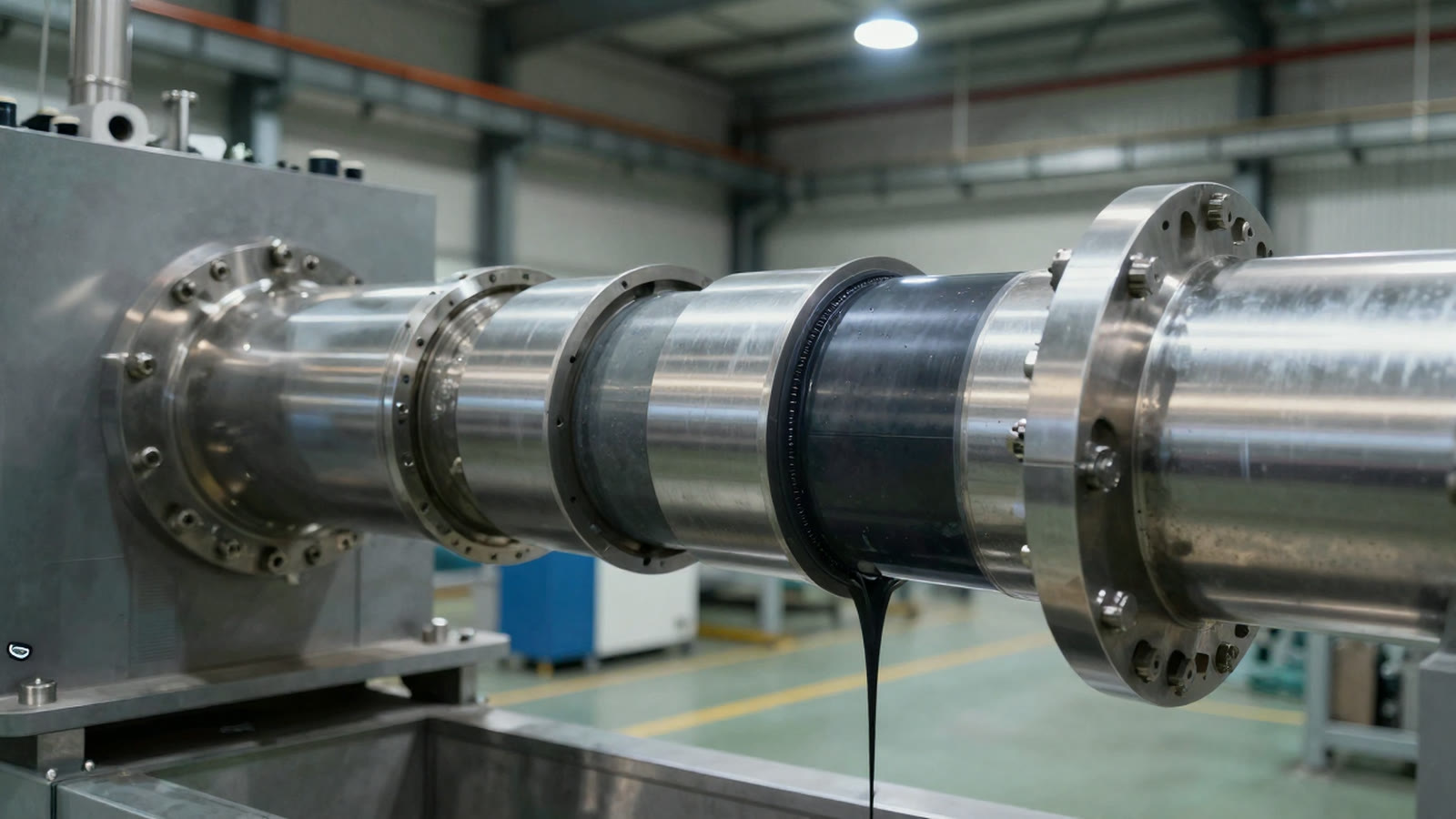
Hyperdispersants do three things in colour masterbatch formulations: prevent pigment and filler agglomeration, improve the distribution rate of powders in the resin, and bring internal and external lubrication into balance. This article summarises the mechanisms and performance of these three points based on the source text of the functional additive product information, with a "symptom → cause" comparison table (pitting, colour spots, map-like mottling, frosting (bloom) after heat sealing, filament breakage, surface roughness), and explains the dosage comparison basis (reduction of 30%-50%) and the limiting conditions for "26 times / 113 times".
- Numerical values appearing in the text: 80℃ · 10% · 40% · 30%
- Article size: 9 sections · 4 data tables · 2 blocks already placed after first screen
- Full text arranged as "Data first → Mechanism second → Selection last", each item's source cited to printed page for traceable review
Moved from the bodyInternal/external lubrication: insufficient side and excessive side · full table moved forward
| Lubrication type | Function (source text) | When insufficient | When excessive |
|---|---|---|---|
| Internal lubrication | "Internal lubrication is beneficial to plasticisation and melt flowability" | Plastic masterbatch is prone to poor dispersion, causing gel spots (fisheyes) | Melt strength decreases, which may reduce the strength of plastic products |
| External lubrication | "External lubrication is beneficial to demoulding and is good for the surface finish of finished articles" | High temperature at the merging core and over-plasticisation → difficult discharge, increased machine current, rough and coarse particle surface, yellowing | Exudation becomes severe: scale build-up in the mould and exudation of external lubricant on the masterbatch surface |
Moved from the bodyQuantification basis and model · whole table moved up
| Symptom | Cause given in the document | Solution given in the document |
|---|---|---|
| Blow moulding filler compound shows small-particle pitting | ① The mineral source contains high-purity silica; the powder cannot be ground finely enough and blocks the screen; ② the calcium carbonate fineness is insufficient (mesh too low); ③ over-fine powder tends to agglomerate, while ordinary “active treatment” using stearic acid or polyethylene wax only encapsulates the powder, without actually dispersing it during treatment | The first two are mineral source and fineness issues; the third is caused by poor dispersion and encapsulation. The solution given in the document is to use a hyperdispersant above 80℃ to complete dispersion and encapsulation in one step |
| Coated colour film develops colour spots | Pigment in the colour masterbatch particles is poorly dispersed and contains agglomerates; the coated film has uneven colour depth and may even show black spots caused by poor dispersion | Select a good dispersant; properly control processing temperature; clean the screw and die head |
| Coated colour film develops map-like uneven colour patches (mottling) | Poor colour masterbatch dispersion; or the pigment has poor heat resistance and fades; or the melt flow index of the colour masterbatch and the coating resin differs too greatly, resulting in inconsistent flowability | Select a good dispersant and high-temperature-resistant pigment; select a carrier resin with a similar melt flow index; adjust the temperature of each coating machine zone so that the viscosities of the two resins are close |
| Colour masterbatch affects film heat-sealing performance (weak seals) | Some low molecular weight polyethylene wax producers blend in paraffin wax (dosage varying from 10%-40%); paraffin wax has low molecular weight, low melting point and a decomposition temperature far below that of polyethylene wax; during processing it decomposes, sublimes and migrates to the film surface, forming frosting (bloom) | Using a hyperdispersant can greatly reduce the use of low molecular weight polyethylene wax |
| Filament breakage in flat yarn production (broken ends, waste yarn, line stoppage) | In addition to resin melt flow index (MFI), draw ratio, cooling water temperature and raw material impurities, poor colour masterbatch dispersion, oversized pigment particles and poor compatibility between carrier and resin make the film surface uneven and not smooth | Select a good dispersant when producing colour masterbatch |
| Colour masterbatch surface is not glossy | Extrusion temperature or die head temperature too high/too low; pigment particles too hard and poorly dispersed; improper quality or dosage of low molecular weight polyethylene wax (paraffin wax adulteration, high-density low-molecular-weight type); improper lubricity treatment of the pigment | First adjust the extrusion temperature; then check pigment dispersion and the quality and dosage of the wax |
Sweep out three arcs frame by frame according to the three functional points in this article: the sequence of swept angles is the sequence of actions described in the data.Scroll-driven, animated frame by frame with requestAnimationFrame; when the system requests reduced motion or the screen is narrow, the final frame is shown directly.
Common problems in colour masterbatch are concentrated in three areas: gel spots (fisheyes), pigment agglomeration, and insufficient surface finish. Californium Curium's functional additive product information breaks down the role of hyperdispersants into three tasks, each corresponding to one of these three problems—these are not conceptual statements; for each item, the corresponding phenomenon description and handling approach can be found in the document.
First, Clarify the Relationship Between Masterbatch and Dispersant
The document defines plastic masterbatch as follows: according to requirements, plastic resin, dispersant, colourant, filler material, lubricant, coupling agent and certain functional additives are combined, then manufactured through high-speed mixing, plasticisation in an extruder, extrusion and pelletising. The value of masterbatch lies at the application end: convenient use, uniform and stable colouring, easy metering, and the ability to combine colouring, anti-ageing, antistatic, filling and other functions in one product to make a multifunctional masterbatch. (Source: Californium Curium – Functional Additives 1.09, PDF page 9 (printed page -5-) / page 10 (printed page -6-))
The document states the position of the dispersant very directly: in order to obtain plastic masterbatch with both excellent appearance and internal quality, besides scientifically designing the mixer and extruder and optimising the extrusion process, "selecting a high-quality dispersant is even more critical." (Source: Californium Curium – Functional Additives 1.09, PDF page 11, printed page -7-)
Action Point 1: Preventing Agglomeration of Pigments and Fillers
The source text reads as follows (quoted verbatim):
During mixing, hyperdispersants, pigments, fillers and other materials are added and mixed according to the formulation. Because the hyperdispersant wets the powder when it combines with the powder, and forms an encapsulation layer as the temperature decreases, agglomeration of the pigment and filler powder is prevented.
Mechanism section (quoted verbatim):
In the synthesis of organic or inorganic pigments and powders, once pigment and powder particles are formed (primary particles), specially designed hyperdispersants rapidly adsorb onto the surfaces of the pigments and powders to form a protective layer (encapsulation), surrounding the pigment and powder particles. At the same time, they fill the lattice defects of the pigment and powder particles and passivate the active sites on the surface that are prone to agglomeration, thereby effectively preventing further agglomeration of pigment and powder particles. Even if the pigment and powder particles agglomerate during filtration, compaction and drying, the agglomerated state is very loose because of the isolating effect of the hyperdispersant (particles contact each other mainly at points and edges), and the resulting pigments and powders are particularly easy to disperse in subsequent applications. Because the powder surface has an encapsulation layer, both the oil absorption value and the coefficient of friction are greatly reduced.
(Source: Californium Curium – Functional Additives 1.09, PDF page 6, printed page -2-; Californium Curium – Hyperdispersant Series, PDF page 1, printed page -10- is the series volume version of the same mechanism.)
The three steps to grasp are: wetting → encapsulation → passivation of active sites. The common result of these three steps is that the powder's "surface state" is rewritten—the oil absorption value and coefficient of friction decrease, and the finer the powder, the higher the surface brightness and saturation. (Source: same as above.)
Action Point 2: Improving the Distribution Rate of Pigments and Fillers in the Resin
The source text reads (quoted verbatim):
During extrusion, because the hyperdispersant has good compatibility with the resin, it tightly binds the encapsulated pigment and filler powder to the surrounding resin and transmits the external shear force to the resin, thereby distributing the pigments and fillers uniformly in the resin.
This point is especially critical for filled masterbatch. The document explains the filler as follows: after the filler dosage is increased, the material plasticises more slowly, melt strength decreases and melt pressure drops; if the powder in the melt cannot be dispersed, gel spots (fisheyes) appear, which affects the quality of the colour masterbatch and increases the reject rate. Therefore, when producing filled masterbatch, or when adding fillers to other masterbatches, a dispersant must be used. (Source: Californium Curium – Functional Additives 1.09, PDF page 12, printed page -8-)
Action Point 3: Balancing Internal and External Lubrication
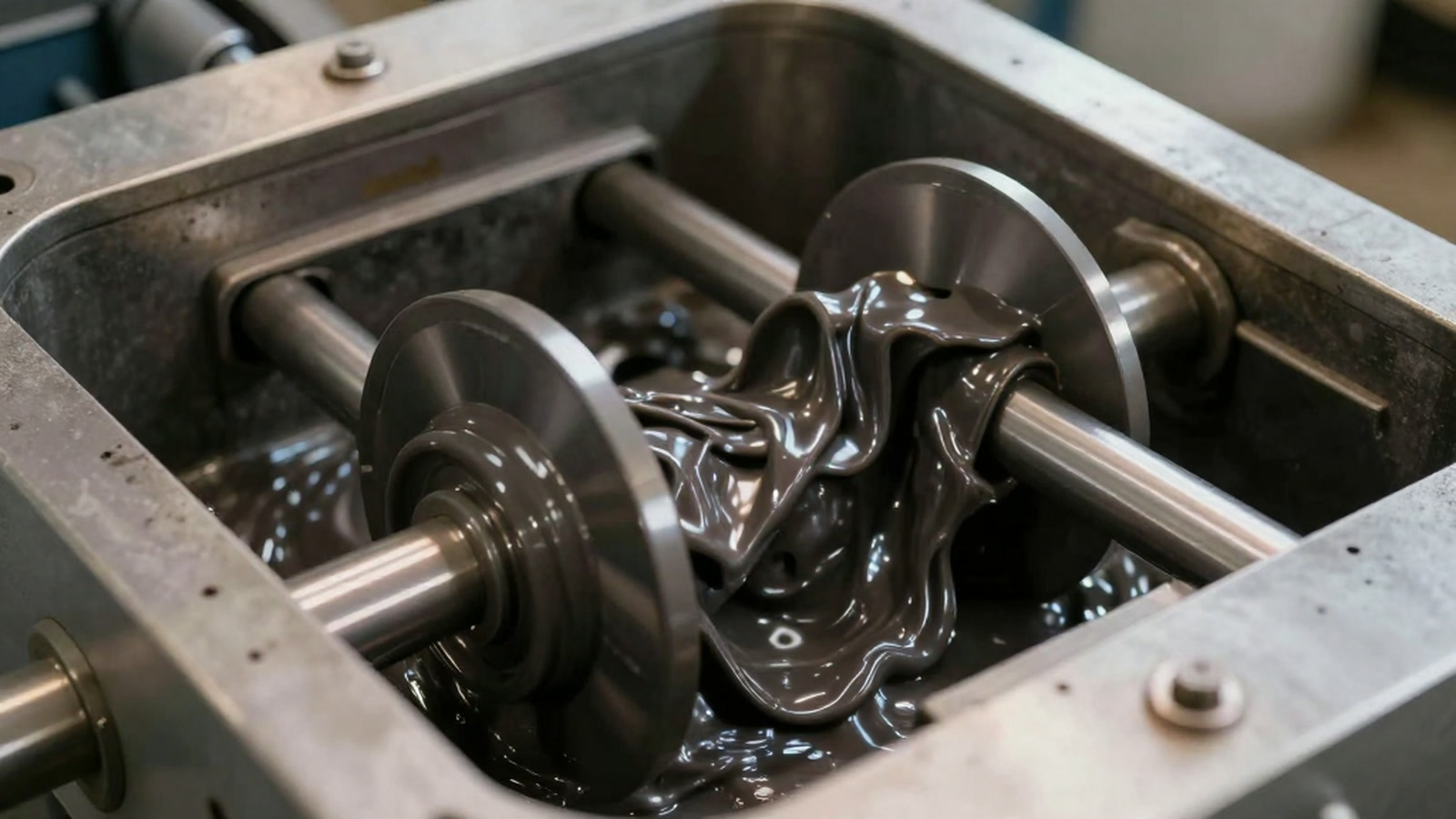
The document divides lubrication into two halves and gives two imbalance symptoms for each (quoted verbatim):
(Source: Californium Curium – Functional Additives 1.09, PDF page 12, printed page -8-)
The document also explains the company's own approach: the company's hyperdispersants all have relatively scientific internal and external lubrication performance, and it is sufficient to add a small amount of lubricant according to formulation needs. In other words, the lubrication system does not need to be fully supplemented separately—first let the dispersant handle the base lubrication, then fine-tune according to the formulation. The quantitative criteria for "too little / too much" internal and external lubrication are not given in the document (this item is not listed); the description here is qualitative. (Source: same as above.)
“Symptom → Cause” comparison table: six observable symptoms that can be matched directly
The application examples chapter in the document presents the six most common symptoms reported from customer sites as a Q&A. They are compared item by item below (including the causes and solutions given in the document):
(Source: for the first three and last three rows, see Hyperdispersant Series PDF pages 3–4, printed -12-/-13-; the same text also appears in Californium Curium – Functional Additives 1.09 PDF pages 16–17 (-12-/-13-))
Read in reverse, this table also works as a selection checklist: if any of the symptoms above appears on your production line, first confirm whether the dispersion system is in place before deciding whether to change other components in the formulation.
Quantitative baselines and qualifications that must be retained
Dosage comparison: The source text states: “The hyperdispersing dispersant developed by our company, compared with similar foreign products, can reduce the dosage in production by 30%-50%, and its dispersing and lubricating performance is still far superior to similar products.” This statement is limited to the hyperdispersant product line and represents the company’s own claim; the grades, equipment and formulation conditions of the comparative test are not given in the document (this item is not listed). (Source: Californium Curium – Functional Additives 1.09 PDF page 8, printed -4-)
Two “multiples” figures, quoted verbatim:
| Model | Source text | Source |
|---|---|---|
| R1800-SK | “Compatibility with all rubbers and plastics is very good; lubricating performance is 26 times that of wax, and dispersing performance is 113 times that of wax.” | Hyperdispersant Series PDF page 5, printed -14- |
| R1800-SH | “Compatibility with all rubbers and plastics is very good; lubricating performance is 28 times that of wax, and dispersing performance is 122 times that of wax.” | Hyperdispersant Series PDF page 9, printed -18- |
dispersing performance / lubricating performance
Degree of dispersion: III
How to combine them: chemical dispersion and wetting dispersion are two tiers
TPS (alkyl acid ester) wetting-type dispersant
Taken together, these two types form a division of labour: paste-form hyperdispersants take the route of chemical dispersion (wetting, encapsulation and transferring shear force to the resin; see Sections 2 and 3); waxes, stearic acid, EBS and TPS-type materials take the route of wetting dispersion (mainly wetting and internal/external lubrication). Using the two tiers together can raise dispersibility to a new level [company claim] — the documented comparable example is the experimental record of R1800-SH and polyethylene wax in the same formulation (formulation: carbon black DK2028P 50g + R1800-SH 1g + polyethylene wax 10g + LLDPE218W 39g). (Source: Hyperdispersant Series PDF page 10, printed -19-)
FAQ
improving the distribution rate
Q2: Why is encapsulation said to prevent agglomeration — is it not just a matter of keeping particles apart? A: The mechanism given in the document goes beyond “separation”: the crystal lattice defects of particles must also be filled, and the active points that tend to cohere must be purified. Even if particles cohere because of filtration compaction or drying, the isolating effect keeps the cohered state loose (point/edge contact), so subsequent dispersion remains easy. (Source: Californium Curium – Functional Additives 1.09 PDF page 6, printed -2-)
Q3: If a dispersant is added, is a lubricant still needed? A: The document states that hyperdispersants themselves provide scientifically sound internal and external lubrication performance, and that a small amount of lubricant may be added as appropriate according to formulation requirements. Symptoms of internal/external lubrication imbalance are shown in the Section 4 table. (Source: Californium Curium – Functional Additives 1.09 PDF page 12, printed -8-)
Q4: Can “26× / 113×” be cited directly in external communications? A: It may be cited, but the qualifiers must be included: item-by-item comparison, no testing method or reference conditions stated, and no third-party report (see Section 6). SH corresponds to 28× / 122×; do not mix the two. (Source: Hyperdispersant Series PDF page 5, printed -14- / page 9, printed -18-)
Q5: If the surface of a colour masterbatch is not glossy, where should action be taken first? A: The document’s recommended order is to check extrusion temperature first — too high or too low can both cause a rough surface. If adjustment is ineffective, then check pigment dispersibility and the wax quality and dosage. (Source: Hyperdispersant Series PDF pages 3-4, printed -12-/-13-)
compared with equivalent foreign products
Q7: Can TPS and hyperdispersants be used together? A: The document positions TPS as a wetting-type dispersant (for matte-finish masterbatch, and can replace polyethylene wax); it is not in a substitution relationship with the R1800 series. The ratio for combined use is not given in the document (this item is not listed in the source). (Source: Hyperdispersant Series PDF page 39, printed -48-)
Sources (traceable item by item)
| # | Document | PDF physical page | Printed page | Used in |
|---|---|---|---|---|
| 1 | Californium Curium – Functional Additives 1.09.pdf | page 5 | -1- | Introduction (division of the three main functions) |
| 2 | Californium Curium – Functional Additives 1.09.pdf | page 6 | -2- | Sections 2 and 3 (agglomeration mechanism, distribution rate) |
| 3 | Californium Curium – Functional Additives 1.09.pdf | page 8 | -4- | Section 6 (30%-50% dosage reduction) |
| 4 | Californium Curium – Functional Additives 1.09.pdf | pages 9-10 | -5-/-6- | Section 1 (masterbatch definition and value) |
| 5 | Californium Curium – Functional Additives 1.09.pdf | page 11 | -7- | Section 1 (dispersants are critically important) |
| 6 | Californium Curium – Functional Additives 1.09.pdf | page 12 | -8- | Sections 3 and 4 (fillers/gel spots, internal and external lubrication) |
| 7 | Californium Curium – Functional Additives 1.09.pdf | pages 16-17 | -12-/-13- | Section 5 (six phenomena, same text as the series volume) |
| 8 | Hyperdispersant Series.pdf | page 1 | -10- | Section 2 (mechanism in the series volume, degree of dispersion III) |
| 9 | Hyperdispersant Series.pdf | pages 3-4 | -12-/-13- | Section 5 (original text of the six phenomena) |
| 10 | Hyperdispersant Series.pdf | page 5 | -14- | Sections 6 and 8 (original text of 26× / 113×) |
| 11 | Hyperdispersant Series.pdf | page 9 | -18- | Sections 6 and 8 (original text of 28× / 122×) |
| 12 | Hyperdispersant Series.pdf | page 10 | -19- | Section 7 (experiment with SH and polyethylene wax in the same formulation) |
| 13 | Hyperdispersant Series.pdf | page 39 | -48- | Sections 7 and 8 (TPS wetting-type dispersant) |
this item is not listed in the source
Article actions
If this piece was useful, you can leave a mark — the like count comes from our back office at admin.kj9896.com; when the endpoint is unreachable the buttons are disabled and the count shows “—”. No invented figures are ever filled in.
Link: https://kj9896.com/en/news/super-dispersant-three-roles
Related reading
- 01Exudation and blooming: why your dispersant is not working28 September 2026
- 02Hyperdispersant and Wetting-Type Dispersant: Division of Roles in Plastics Colouring and Four Operational Guidelines1 October 2026
- 03Same “0.5–2%,” Two Denominators in Manuals: Why Conductive Carbon Black Additive Dosages Cannot Be Directly Converted11 October 2026
Products mentioned in this article
Keep reading
More company announcements and product updates are in the newsroom.