
Plastics water & oil repellent (anti-soiling agent)Internal addition · fluorine-free system · biomimetic lotus effect · breathable water & oil repellency
Added internally to chemical fibre products, it lowers the fibre surface tension, so water droplets cannot wet the surface — water and oil repellency, also called breathable water and oil protection; the finished fabric still keeps excellent breathability.
- ⊘F Fluorine-free · fully non-fluorinated system
- 🍃 Biomimetic lotus effect · self-cleaning
- 🧵 Internal addition · resists washing/dry cleaning/rubbing
- 💨 Does not affect breathability
- Specific surface area
- 0 ± 25 m²/g
- Bulk density (approx.)
- 约 0 g/l
- pH (4% dispersion)
- 0 – 0
- SiO₂ content (on ignited basis)
- > 0 Wt.%
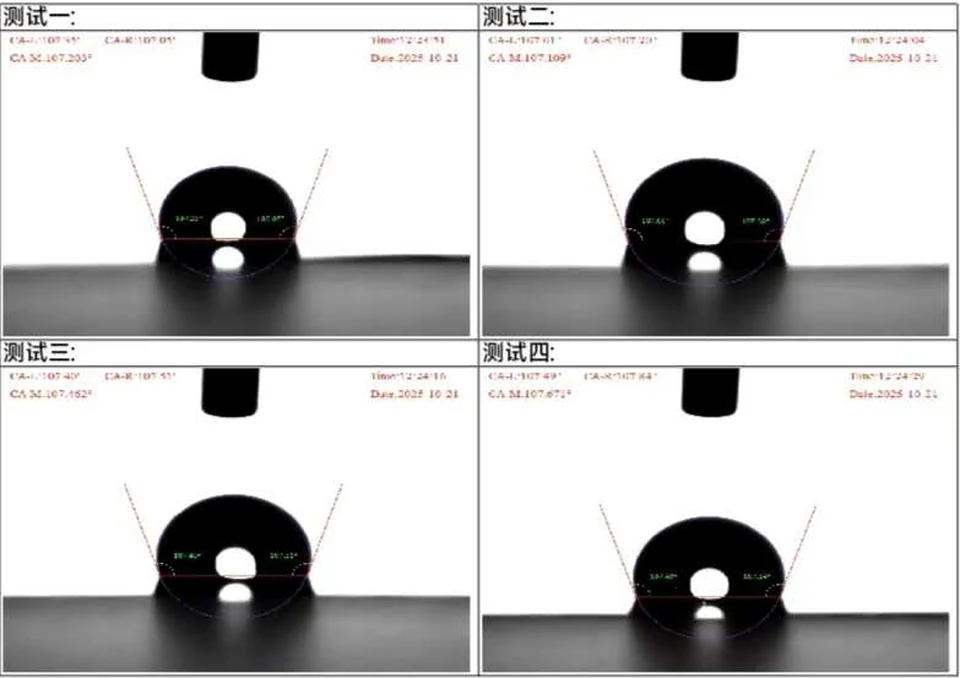
Contact-angle bench · proof of the lotus effect
Switch the surface state: on untreated substrate the droplet spreads and wets; on an R77 surface it beads up, rolls off and carries soil particles away.
A fully non-fluorinated system · the ecological trend
Unlike conventional fluorinated water repellents, this product is a fully non-fluorinated system, which is more environmentally friendly and safe, and matches the modern development trend of ecological textiles and plastics.
Super-hydrophobic and oleophobic · self-cleaning
It gives the substrate surface outstanding super-hydrophobic and oleophobic performance; water droplets slide off very easily, showing the classic lotus effect and delivering excellent anti-soiling, self-cleaning results.
Resists washing · dry cleaning · rubbing
As an internal-addition water and oil repellent, the active ingredient penetrates deep into the substrate and offers outstanding resistance to washing, dry cleaning and rubbing, and very high durability, while not affecting the breathability of the article.
Main components and physical/chemical properties
Two-component build: silica carrier + hydrogenated silicone active phase.
Application range and dosage
Fabric performance depends on the additive and the fabric structure acting together.
Recommended dosage: 0.5% — 1% of the final plastics compound. Widely suitable for chemical fibre, PP, PE and similar systems; fabric treated with R77 still keeps excellent breathability.
Packing, storage and sample request
Submit the form on the right and a technical consultant will contact you within 24 hours to arrange a sample.
Packing and storage
01Product positioning
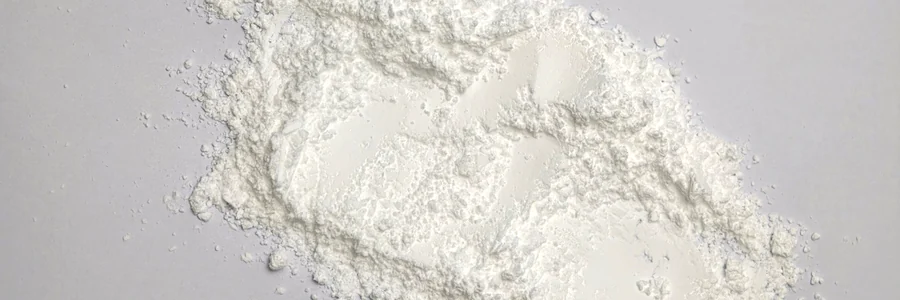
First, draw the boundaries clearly. R77 is a processing aid—an 'internal-additive water and oil repellent agent': it is added directly at the chemical fiber or plastic raw material stage and is formed together with the raw material, rather than relying on finishing to 'attach' the repellent to the fabric surface. It is supplied as the additive itself (white powder); resin blending, pelletizing, and carrier-resin incorporation belong to the masterbatch line (M series), while R77 addresses the 'directly added into the raw material system' route. (Data source: product handbook / official product data)
Names and categories (recorded as given at each layer). The manual page title verbatim: 'Plastic Water and Oil Repellent R77'; the manual table of contents line and official full name verbatim: 'Plastics Internal-Additive Water and Oil Repellent Agent'; official English name: 'Hydrophobic/Oleophobic R77'; official category field: 'Water and Oil Repellent Agent' (English category name: Hydrophobic Agent). There are two other short names on the official website—the list title 'Hydrophobic Agent (Fluorine-Free)' and the detail page title 'Plastics Internal-Additive Hydrophobic Agent (Fluorine-Free)'—they coexist at each layer, all recorded as in the source and not altered interchangeably. (Data source: product handbook / official product data)
Series positioning. R77 belongs to the Comprehensive Series (27 models released externally), 3rd in list order (preceded by R78 in the hydrophilic direction, followed by sister grade R77F). Official one-liner (tagline): 'Internal-additive water and oil repellency, long-lasting protection'. (Data source: product handbook / official product data)
The main application line is synthetic fabrics, with anti-soiling plastics as a secondary use. The documentation states 'suitable for materials such as raincoats, outdoor jackets, and travel bags', and explicitly states 'can also be used for anti-soiling plastic films, various anti-soiling plastic components, etc.'; [Application Scope] is 'plastics and chemical fibers PP, PE'. (Data source: product handbook / official product data)
The route characteristic is a 'fluorine-free system'. The detail page states very plainly that it is 'different from traditional fluorine-based waterproofing agents': this product is a pure fluorine-free system, in line with the development trends of modern ecological textiles and plastic products; the list title also directly labels it 'fluorine-free'. This point is most easily confused with sister grade R77F—R77F follows a fluorine-containing ionic route, and the two grades have opposite directions and are not interchangeable (see Section 6 for field-by-field details). (Data source: product handbook / official product data)
Compliance positioning: this page does not involve 'halogen-free / low-halogen' statements. R77 does not belong to flame-retardant systems, nor is it on the true halogen-free nine-model list; there are 0 halogen statements associated with R77 itself—halogen-free and low-halogen are both not applicable (the latter is an M922-exclusive statement), and this page states 'not applicable'. (Data source: product handbook / official product data)
02Formulation system & mechanism of action
Two components, all taken from this grade's documentation. [Main Components] verbatim: 'Silica 33% hydrogenated silicone 67%'. The detail page interprets these figures as 'two-component composition: silica carrier + hydrogenated silicone active phase'—silica serves as the dispersing carrier, and hydrogenated silicone is the active phase that provides low surface energy. This grade page does not list a third component; we do not invent one. (Data source: product handbook / official product data)
Mechanism layer 1: lower the surface tension. The manual's original wording is: when internally added to chemical fiber products, 'it lowers the surface tension of the fibers, so that water droplets cannot wet the surface'—this process is called water and oil repellency, also known as breathable waterproof and oil-proof. The key word is 'breathable': water repellency is not achieved by a closed coating, so the documentation immediately following states 'fabrics to which R77 water and oil repellent agent has been added can still maintain their breathability'. (Data source: product handbook / official product data)
Mechanism layer 2: lotus leaf effect (qualitative layer). The detail page describes the macroscopic effect as 'imparts excellent superhydrophobic and oleophobic properties to the substrate surface; water droplets slide off the surface very easily, exhibiting a typical lotus leaf effect and achieving an excellent anti-soiling self-cleaning effect'; the schematic animation notes 'micro-nano papillae structure + low surface energy → superhydrophobic and oleophobic'. This is a schematic statement—quantitative criteria such as contact angle values and water repellency grades are not provided in the documentation, and they should not be cited as measured data in the published version. (Data source: product handbook / official product data)
Mechanism layer 3: durability follows the internal-additive route. The detail page states: 'As an internal-additive water and oil repellent agent, the active ingredients penetrate deep into the substrate, providing extremely excellent washing resistance, dry-cleaning resistance, abrasion resistance, and durability, while not affecting the breathability of the product.' (Data source: product handbook / official product data)
Mechanism layer 4: anti-soiling is an extended use. Alias 'anti-soiling agent'; the use statement is 'can also be used for anti-soiling plastic films, various anti-soiling plastic components, etc.'—water and oil repellency makes contaminants less likely to adhere and easier to be carried away by water droplets (the detail page describes droplets beading up, rolling off, and rolling away soil particles). (Data source: product handbook / official product data)
Documentation boundaries. The chemical structure breakdown of the hydrogenated silicone, the quantitative description of the active-phase dispersion mechanism, and third-party test conclusions—none are provided on this grade page; we do not invent them. (Data source: product handbook / official product data)
03Key parameters
The table below summarizes the physicochemical indicators recorded in the documentation; the values in the table are documented values, and small-scale testing is recommended before batch use.
| Item | Value / description |
|---|---|
| Main component | Silicon dioxide 33% hydrogenated silicone 67% |
| Appearance | White powder |
| Specific surface area | 200+25m²/g |
| Bulk density | (Approximate value) about 320g/l |
| Water content | at 105℃ for 2 hours’ <3Wt.% |
| pH value | 4.5-6.2 in 4% dispersion |
| Sio content | Wt% >33 based on material after ignition |
| Loss on ignition | Material after drying at 105℃ for 2 hours, ignited at 1000℃ for 2 hours <66Wt.% |
The values in the table are documented values; small-scale testing is recommended before batch use. (Data source: product handbook / official product data)
04Recommended dosage window
How to read the window. First, this is a powder additive, based on the final plastic product as denominator; 0.5%—1% is a narrow band; the sister grade R77F is 0.8%—1%; the two must not be copied from each other. Second, the denominator must be aligned: do not mix it with masterbatch-side dosages calculated on a "plastic raw material" basis (masterbatch loading is not disclosed in the documentation; changing the denominator is equivalent to changing the calculation method). Third, state the absence of direction clauses as it is: do not write "thinner add more / thinner add less"; fixed values should go through small-scale testing. (Data source: product handbook / official product data)
| Scenario | Dosage | Conditions & notes |
|---|---|---|
| Baseline window | 0.5%—1% of the final plastic product (same basis as the handbook [Addition Content] and the official dosage field) | Product handbook / official product data |
| Denominator basis | Final plastic product (as stated in the documentation; cannot be converted to masterbatch-side dosages calculated on plastic raw material basis) | Product handbook / official product data |
| Detail page presentation | Large value 0.5–1%; explanatory sentence "Recommended addition amount: 0.5% — 1% of the final plastic product" | Official product data |
| Thickness direction | No clause—documentation does not provide a "thinner add more / thinner add less" type direction; do not apply any other grade's direction | Product handbook / official product data |
| Application measured points | Not provided in the documentation (the contact angle comparison table on the detail page is an illustrative animation, not measured values) | Official product data |
Factors determining dosage and denominator basis are subject to the documentation; for actual addition amount, please request the technical documents supplied with the goods for the specific item code and conduct small-scale testing.

The above are documented values; for actual production, please conduct small-scale testing in combination with your own system and process for confirmation. (Data source: product handbook / official product data)
05Applications
Material line and processing position. The target system has two layers: chemical fiber products (fabrics) and plastic chemical fiber, PP, PE—the [Application Scope] line reads verbatim "plastic chemical fiber PP, PE"; the documentation also names fabric materials such as raincoats, outdoor jackets, and travel bags, as well as antifouling plastic films and various antifouling plastic components. The addition method is internal addition (the documentation states verbatim "internally added to chemical fiber products"; the form field records "internal addition type"); process steps, mixing equipment and screw, and spinning parameters are not provided in the documentation—under an internal addition route, dispersion uniformity directly affects performance consistency, and it is recommended to include this in the small-scale test plan and determine together. (Data source: product handbook / official product data)
- Material line and processing position
- The target system has two layers: chemical fiber products (fabrics) and plastic chemical fiber, PP, PE—the [Application Scope] line reads verbatim "plastic chemical fiber PP, PE"; the documentation also names fabric materials such as raincoats, outdoor jackets, and travel bags, as well as antifouling plastic films and various antifouling plastic components. The addition method is internal addition (the documentation states verbatim "internally added to chemical fiber products"; the form field records "internal addition type"); process steps, mixing equipment and screw, and spinning parameters are not provided in the documentation—under an internal addition route, dispersion uniformity directly affects performance consistency, and it is recommended to include this in the small-scale test plan and determine together. (Data source: product handbook / official product data)
- Effect conditions and breathability retention
- The effect is the result of combined action: "The water- and oil-repellent effect of the fabric depends not only on the additive but also on the fabric's organizational structure"; the detail page requires "after the formula ratio is set, please conduct small-scale testing in combination with the organizational structure for confirmation." The handbook points out breathability retention in two places—"fabrics with R77 water- and oil-repellent agent added can still maintain their breathability" and "also called breathable waterproof and oil-proof." (Data source: product handbook / official product data)
- Scope reminder (do not overstep)
- The applicable scope statement contains the word "etc.", but the documentation does not provide a complete list—whether other substrates are applicable, the processing temperature window, and mixing equipment requirements are all not stated; treat blanks as "not stated in the documentation"; do not extrapolate, do not draft on behalf. (Data source: product handbook / official product data)
Field issues & application examples (as recorded in the source material)
| Field issue | What the source material states |
|---|---|
| What exactly is R77? Where is it used? | A plastic internal-addition-type water- and oil-repellent agent (also called an antifouling agent), with two components: a silica carrier and a hydrogenated organosilicon active phase; internally added to chemical fiber products (raincoats, outdoor jackets, travel bags, etc.), and also used for antifouling plastic films and various antifouling plastic components; application scope is plastic chemical fiber PP, PE. (Data source: product handbook / official product data) |
| What is the difference between R77 and R77F? | Three hard differences: ① Direction—R77 is a fluorine-free system, R77F is a fluorine-containing ion (contains no perfluorinated and organofluorine compounds, can pass perfluoro inspection); the two have opposite directions and are not interchangeable; ② Components—R77 has two items (silica 33% hydrogenated organosilicon 67%), R77F has three items (multi-magnesium oxide 16.5%); ③ Dosage—R77 is 0.5%—1% of the final plastic product, R77F is 0.8%—1%. In addition, the two pages are structurally asymmetric (R77F has more "protective clothing" and perfluoro compliance narrative; the R77 page has an [Application Scope] subsection and an alias); for grade selection, refer to the original text on each page and written confirmation from the product side. (Data source: product handbook / official product data) |
| How is the addition amount determined? What is it calculated on? | The baseline window is "0.5%—1% of the final plastic product"; the denominator is the final plastic product; the detail page advises small-scale testing in combination with the fabric organizational structure after the ratio is set. The documentation does not provide tiered subdivisions or upper-limit verification, nor a thickness direction clause—do not write "thinner add more / thinner add less." (Data source: product handbook / official product data) |
| How is it added? At which step? | The documentation states verbatim "internally added to chemical fiber products"; the form is internal addition type; process steps, equipment, and temperature window are not provided on this grade's page; follow on-site process and written confirmation from the product side. (Data source: product handbook / official product data) |
06How it differs from related grades
(1) Core of this page: field-by-field comparison of R77 and its sister grade R77F. The two are paired on pages and run in opposite directions, and are most easily confused during selection:
| Comparison item | R77 | R77F | Source |
|---|---|---|---|
| Page title (handbook) | Plastic water- and oil-repellent agent R77 | Breathable water- and oil-repellent agent R77F | Product handbook |
| Official full name / handbook catalog line | Plastic internal addition type water- and oil-repellent agent | Plastic internal addition type breathable water- and oil-repellent agent | Product handbook / official product data |
| Category field | Water- and oil-repellent agent | Breathable water-repellent agent | Official product data |
| Main components | Silica 33% hydrogenated organosilicone 67% (two items) | Silica 27.5% hydrogenated organosilicone 56% magnesium oxide 16.5% (three items) | Product handbook / official product data |
| Fluorine direction | Fluorine-free system | Fluorine-containing ions (does not contain perfluorinated and organofluorine compounds; can pass perfluoro testing) | Official product data |
| Specific surface area | 200+25m²/g | 230+25M2/g | Product handbook |
| Bulk density (approximate value) | approx. 320g/l | approx. 330g/l | Product handbook |
| pH value (4% dispersion) | 4.5-6.2 | 4.2-5.8 | Product handbook |
| Sio content (material after ignition) | 33 | 28 | Product handbook |
| Loss on ignition | <66Wt.% | <72Wt% | Product handbook |
| Water content (105℃/2 hours) | <3Wt.% | <3Wt.% (same item) | Product handbook |
| Appearance | White powder | White powder (same item) | Product handbook |
| Application scope subsection | Present: plastics and chemical fibers PP, PE | This page has no such subsection | Product handbook |
| Overview alias | Also known as antifouling agent | No 'also known as' wording | Product handbook |
| Overview application examples | Raincoats, outdoor jackets, travel bags, etc. | Raincoats, outdoor jackets, travel bags, protective clothing, etc. | Product handbook |
| Official application tags | Packaging films / water-repellent nonwovens / protective materials | Breathable functional films / protective clothing fabrics / breathable packaging | Official product data |
| Addition amount | 0.5%—1% of the final plastic product | 0.8%—1% of the final plastic product | Product handbook / official product data |
| Packaging | 10kg/bag | 10 kg/bag | Product handbook / official product data |
| Storage conditions (detail page) | Cool, dry place · protect from moisture | Store in a cool, dry place · protect from moisture | Official product data |
| Compatibility item | Not listed in the data | Not listed in the data (same) | Product handbook |
| Detail page eco badge | '⊘F fluorine-free eco-friendly · pure fluorine-free system' | 'Eco perfluoro compliance · can pass perfluoro testing' | Official product data |
Reading note: The comparison only explains each item's documentation positioning and applicable targets; values for different grades must not be applied interchangeably. Determination should be based on the official full name and category field. (Data source: product handbook / official product data)
07Usage & storage
The following points are taken item by item from the documented data; items not listed in the data are not supplied by assumption.
Key points for use, storage, and transport (as documented)
- Dosage: 0.5%—1% of the final plastic product (the handbook and official dosage field use the same basis). (Data source: product handbook / official product data)
- Addition method and stage: internally added into chemical fiber products (source wording); process steps, mixing equipment, and processing temperature window are not given in the data—follow on-site processes and written confirmation from the product side. (Data source: product handbook / official product data)
- Effect conditions: depend on the combined action of the additive and the fabric structure; after fixing the ratio, confirm by small-scale trials in combination with the fabric structure. (Data source: official product data)
- Breathability and antifouling: after addition, the fabric still maintains excellent breathability ('does not affect the breathability of the product' is the detail page wording); it is also used for antifouling plastic films and antifouling plastic devices (qualitative statement). (Data source: product handbook / official product data)
- Compatibility: not listed in the data; for multi-additive formulation systems, verification together in the small-scale trial stage is recommended (not assumed). (Data source: product handbook / official product data)
- Packaging and storage: 10kg/bag (the detail page states '10 kg / bag'); cool, dry place, and the detail page adds 'protect from moisture'; shelf life and packaging liner details are not recorded in the data; when there are specific storage requirements, written confirmation from the product side shall prevail. (Data source: product handbook / official product data)
- Handling protection: not listed in the data; on site, follow enterprise safety regulations and conventional powder additive feeding requirements. (Data source: product handbook)
08FAQ
What exactly is R77? Where is it used?
A plastic internal addition type water- and oil-repellent agent (also known as an antifouling agent), with two components: a silica carrier and a hydrogenated organosilicone active phase; it is internally added into chemical fiber products (raincoats, outdoor jackets, travel bags, etc.) and is also used for antifouling plastic films and various antifouling plastic devices; application scope: plastics and chemical fibers PP, PE. (Data source: product handbook / official product data)
What is the difference between R77 and R77F?
Three hard differences: 1) Direction—R77 is a fluorine-free system, R77F is fluorine-containing ions (does not contain perfluorinated and organofluorine compounds, can pass perfluoro testing); the two run in opposite directions and are not interchangeable; 2) Components—R77 has two items (silica 33% hydrogenated organosilicone 67%), R77F has three items (additional magnesium oxide 16.5%); 3) Dosage—R77 is 0.5%—1% of the final plastic product, R77F is 0.8%—1%. In addition, the two pages are structurally asymmetric (R77F has additional 'protective clothing' and perfluoro compliance narrative, while the R77 page has an [Application Scope] subsection and alias); selection should be based on the original wording on each page and written confirmation from the product side. (Data source: product handbook / official product data)
How is the dosage determined? What is it based on?
The baseline window is '0.5%—1% of the final plastic product', and the denominator is the final plastic product; the detail page notes to confirm by small-scale trials in combination with the fabric structure after fixing the ratio. The data does not provide tiered subdivision or upper-limit verification, nor any thickness-direction clause—do not write 'add more when thinner / add less when thinner'. (Data source: product handbook / official product data)
How is it added? At which step?
The source wording is 'internally added into chemical fiber products', and the form is internal addition type; process steps, equipment, and temperature window are not given on this grade's page; follow on-site processes and written confirmation from the product side. (Data source: product handbook / official product data)
Can it be described as 'halogen-free' or 'low-halogen'?
Neither is allowed. R77 does not belong to a flame retardant system, nor is it on the list of nine true halogen-free grades; there are 0 halogen statements associated with R77 itself—halogen-free and low-halogen are both not applicable (the latter is M922-specific wording), and this page states 'not applicable'. (Data source: product handbook / official product data)
Does R77 contain fluorine?
R77 follows the fluorine-free system route—the official website list title is 'water repellent (fluorine-free)' and the detail page records 'pure fluorine-free system'; its two main components are both fluorine-free ingredient entries. The sister grade R77F is in the fluorine-containing ion direction (does not contain perfluorinated and organofluorine compounds); the two run in opposite directions and are not interchangeable. (Data source: official product data)
What is the relationship with the water- and oil-repellent masterbatch M89?
The series-level wording lists 'water- and oil-repellent agents (R77/77F)' as one of the core additives in the functional masterbatch series; M89's own mapping records 'fluorine-containing / fluorine-free water- and oil-repellent agents' (general designation); which code uses which grade is not named in the data—present them side by side, do not infer, and the two sets of dosages cannot be converted into each other either. (Data source: official product data)
Will it affect breathability? What else is the effect related to?
It does not take the 'occlusive coating' route: the data states that 'fabrics to which R77 water- and oil-repellent agent has been added can still maintain their breathability', and the definition of water and oil repellency is 'breathable waterproof and oil-proof'. The effect also depends on the fabric structure, so after fixing the ratio, confirm by small-scale trials in combination with the fabric structure. (Data source: product handbook / official product data)
AppendixData sources
This page's data comes from two types of documentation and can be traced item by item:
- Facts on this page come from two types of sources: product handbook and official product data; where quantitative data is blank, it is always written as 'not stated in the data / not given in the data', and no numerical values are supplied by assumption.
- The contact angle comparison panel, composition ratio ring, and feature cards on the official detail page are qualitative illustrations and are not cited as measured data; if they conflict with the handbook clauses, the handbook clauses shall prevail.
- Halogen and fluorine wording: for R77, halogen is treated as 'not applicable'; the fluorine direction is a fluorine-free system, opposite to the fluorine-containing ion direction of sister grade R77F, and they are not interchangeable. Dosage and process parameters shall ultimately be based on the technical documents supplied with the goods and written confirmation from the product side.
Not covered by the source material (not written on this page — to be added later)
- The compatibility item is entirely missing—not listed on this grade's page (the R169 page in the same line has this clause).
- Processing details (process steps, mixing equipment, screw and spinning parameters, feeding sequence)—not given in the data.
- Tiered subdivision and upper-limit verification for the 0.5%—1% dosage—only the overall range is given in the data.
- Scenario-by-scenario selection boundaries for R77 and R77F—the data only gives the direction and each grade's application fields.
- Code-by-code correspondence between R77 / R77F and M89—not named in the data; the masterbatch loading is not disclosed (cannot be converted).
- Quantitative criteria for 'superhydrophobic and superoleophobic / lotus effect' (contact angle, water repellency rating)—the detail page contains an illustrative animation.
- Quantitative durability criteria (wash resistance, dry cleaning, number of rubs and retention rate); shelf life and packaging liner details.